Ethereum doesn’t always announce its next move with a sudden price explosion. Often, it whispers first—through on-chain behavior, market positioning, and the quiet but powerful actions of large holders. In recent days, Ethereum has delivered one of those whispers that traders and investors ignore at their own risk: around $1.06 billion worth of ETH was accumulated in a short span, widely linked to whale activity and significant exchange outflows.
This kind of move isn’t just a flashy number meant to grab attention. It’s a crucial market signal because it reflects what high-capital participants are doing while most retail traders are still watching short-term candles and headlines. When whales accumulate Ethereum at scale, it often means one of two things: either they believe the asset is undervalued at current levels, or they are positioning for a major liquidity event where volatility is likely to expand.
The Ethereum market is driven by more than hype. It is shaped by supply distribution, exchange liquidity, derivatives positioning, and investor psychology. Whale accumulation affects all of these. Pulling large amounts of Ethereum off exchanges reduces immediate sell-side pressure, which can tighten supply and create the conditions for sharp price movements—especially if demand rises.
In this article, we’ll break down what the $1.06 billion Ethereum accumulation really means, why it’s being treated as a major signal, how Ethereum price action may respond, and what traders should watch next. We’ll also explore the risks, the bullish scenarios, and why Ethereum remains one of the most closely watched assets in the crypto space.
Why the $1.06B Ethereum Accumulation Is a Big Deal
At the heart of the story is simple behavior: whales bought and held. But in crypto markets, the context of where Ethereum goes after being purchased matters even more than the purchase itself.
Whales are often defined as wallets holding significant amounts of Ethereum, typically large enough to impact liquidity conditions. When these whales accumulate ETH, they can create measurable changes in market structure. The recent accumulation—estimated at about $1.06 billion worth of Ethereum within days—suggests aggressive positioning.
This becomes particularly meaningful when it aligns with large withdrawals from exchanges. Exchanges are the primary venues where traders sell quickly. When Ethereum moves off exchanges and into long-term storage or staking-related activity, it implies reduced short-term selling intention. That doesn’t guarantee a rally, but it does improve the probability that the next significant move could be upward—especially if the broader market environment supports risk-on sentiment.
Another reason this matters is timing. Whale accumulation tends to stand out most when price is consolidating, sentiment is uncertain, or traders are hesitant. These are often the conditions where larger players quietly build positions, anticipating that the crowd will only react after the trend becomes obvious.
Ethereum Exchange Outflows and Supply Pressure
One of the most powerful on-chain signals in crypto is the movement of assets between exchanges and private wallets. The reason is simple: assets on exchanges are liquid and ready to be sold. Assets in private wallets are less likely to be sold immediately.

When Ethereum is withdrawn from exchanges in large quantities, it can reduce “available supply” for immediate selling. If demand stays constant or increases, that supply reduction can support price.
How Exchange Liquidity Shapes Ethereum Price
Ethereum price action isn’t only determined by how many people want to buy. It’s also shaped by how easy it is for sellers to provide supply. When whales remove ETH from exchanges, they reduce the inventory available for quick selling. This matters because crypto markets can move quickly; when supply is thin, a burst of buy orders can push price much higher.
This is why traders watch Ethereum exchange reserves. A sustained decline in exchange reserves is often seen as a bullish sign. A sudden decline—especially linked to whales—can become an even stronger signal.
The Supply Squeeze Effect in Ethereum
A supply squeeze happens when demand rises but supply is limited. In Ethereum, this can occur when large holders accumulate and remove ETH from exchanges. If price begins to climb while supply remains tight, it can create a chain reaction: traders chase the move, shorts get squeezed, and momentum builds rapidly.
While supply squeezes aren’t guaranteed, they often produce the kind of sharp, vertical candles that Ethereum is known for—especially when liquidity conditions are already fragile.
What Whale Accumulation Typically Signals for Ethereum
Whale activity is not a perfect predictor, but it’s rarely meaningless. Large holders usually act based on strategic expectations rather than emotion. When whales accumulate Ethereum quickly, it often suggests one or more of the following:
Confidence in Ethereum’s Near-Term Upside
Whales may be buying because they believe Ethereum is undervalued relative to upcoming catalysts. These catalysts could include ecosystem growth, adoption of Layer 2 scaling, rising DeFi activity, or broader crypto market recovery. When whales move early, they attempt to position before retail investors return.
Long-Term Accumulation for Staking and Yield
Ethereum’s proof-of-stake model allows holders to earn yield through staking. For whales, accumulating ETH can be both a market bet and a yield strategy. If the goal is staking, they’re less likely to sell quickly, which can further reduce sell pressure.
Positioning for Volatility Expansion
Even if whales don’t know the exact direction, they may anticipate that Ethereum volatility will increase soon. Accumulating during quiet periods allows them to gain exposure before a breakout occurs. In these cases, the crucial market signal isn’t “price will go up tomorrow,” but rather “the market is preparing for a bigger move.”
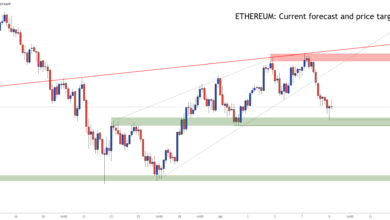
Ethereum Technical Analysis: Levels That Matter Right Now
On-chain accumulation is most powerful when it aligns with technical structure. Ethereum can show whale buying and still remain stuck under resistance. Traders look for confirmation through price reclaiming key levels.
Key Support Zones for Ethereum
Support zones represent levels where buyers historically step in. When whales accumulate, it often happens near support or during pullbacks into demand zones. If Ethereum holds its support levels during or after whale accumulation, it reinforces the idea that strong hands are defending price.
Resistance Zones That Can Trigger a Breakout
Resistance zones are where Ethereum has previously been rejected. For ETH to turn whale accumulation into a meaningful rally, it often needs to break and hold above resistance. If Ethereum pushes through resistance with rising volume and improving momentum, traders interpret that as confirmation that accumulation is working.
Momentum Indicators That Support the Bullish Thesis
Traders also use momentum indicators such as RSI, moving averages, and trend structure. When Ethereum begins forming higher lows and higher highs, it suggests that demand is returning. Whale accumulation becomes more relevant if momentum shifts from bearish to neutral and then to bullish.
Role of Market Sentiment: Why This Signal Matters Now
The crypto market is driven heavily by narrative and psychology. Ethereum is no exception. The reason whale accumulation is such a crucial market signal is that it often appears when sentiment is fragile.
Retail investors tend to buy excitement and sell fear. Whales tend to do the opposite. If Ethereum has recently faced uncertainty, sideways action, or pullbacks, whales may see opportunity where others see risk.
This psychological imbalance can lead to dramatic reversals. When retail traders finally regain confidence, price often moves fast because whales already built positions earlier. In this sense, whale accumulation can be viewed as “early positioning” before sentiment shifts.
What Could Invalidate the Ethereum Whale Signal?
Even strong signals can fail. Ethereum markets are influenced by macro conditions, liquidity cycles, and sudden events. Here are key risks that could invalidate the bullish interpretation.
Whales Might Be Accumulating for a Short-Term Trade
Not all whale accumulation is long-term conviction. Some whales accumulate for tactical trades and then distribute into strength. If Ethereum rallies and those whales begin sending ETH back to exchanges, it can create strong sell pressure.
Macro Market Pressure Can Override On-Chain Signals
If broader markets enter a risk-off phase, Ethereum can decline even with whale accumulation. Crypto is highly sensitive to liquidity and investor confidence. In periods of global risk reduction, even bullish crypto signals can be muted or reversed.
Derivatives Overheating Can Trigger Pullbacks
If traders become overly bullish too quickly, funding rates and leverage can rise sharply. In such cases, Ethereum may experience liquidations that temporarily pull price down, even if whales are accumulating.
What This Means for Ethereum Investors and Traders

This crucial market signal provides context, not certainty. The smartest approach depends on your time horizon and risk tolerance.
For Long-Term Ethereum Investors
For long-term investors, whale accumulation can reinforce the case for Ethereum as a core asset. It suggests that large participants still see long-term value, even during periods of uncertainty. This can support steady accumulation strategies and disciplined positioning.
For Swing Traders
Swing traders typically wait for confirmation. Whale accumulation is a strong clue, but they want Ethereum to break resistance, confirm trend reversal, and maintain higher highs. If those conditions appear, the risk/reward becomes more favorable.
For Short-Term Traders
Short-term traders focus on volatility. Whale accumulation can precede large moves, but not always upward. The key is risk control: define invalidation points, respect support and resistance, and avoid emotional chasing.
Conclusion
The $1.06 billion Ethereum accumulation over a short period is not just another crypto headline—it’s a crucial market signal that reflects major positioning. When whales accumulate Ethereum and withdraw it from exchanges, they reduce liquid supply and potentially create the conditions for a sharp move.
Still, Ethereum must confirm through technical structure. If ETH holds key support zones and breaks meaningful resistance, whale accumulation may prove to be the early clue that a bullish phase is forming. If macro pressure increases or whales begin distributing, the signal may fade.
The best way to treat this moment is with disciplined awareness. Ethereum is showing signs of capital moving with conviction. Now, the market needs to decide whether it turns that conviction into a trend.
FAQs
Q: What does the $1.06 billion Ethereum accumulation mean?
It suggests that whales have bought large amounts of Ethereum in a short time and may be positioning for a major market move, potentially reducing near-term sell pressure.
Q: Is whale accumulation always bullish for Ethereum?
No. Whale accumulation often indicates confidence, but whales can also trade short-term and distribute later. The signal is stronger when supported by bullish technical confirmation.
Q: Why do Ethereum exchange outflows matter?
Because Ethereum leaving exchanges usually means it’s less likely to be sold immediately. This can reduce liquid supply and support price if demand rises.
Q: What should traders watch after this Ethereum signal?
Traders should watch key Ethereum support and resistance zones, exchange flows, momentum indicators, and whether whales start sending ETH back to exchanges.
Q: Can Ethereum still fall even after whales accumulate?
Yes. Ethereum can decline due to broader market risk-off conditions, leverage liquidations, or whale distribution. Whale accumulation is a signal—not a guarantee.
Also More: Big Ethereum News as Trend Research Buys 600K ETH