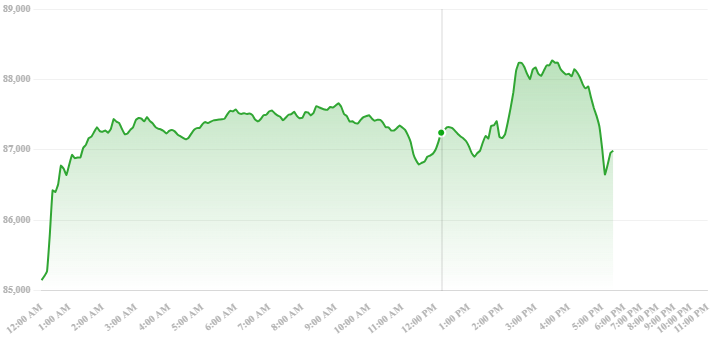
Bitcoin Drops Below $93K it was doing what it often does before a big move: staying unusually quiet. Price action felt contained, dips were bought quickly, and the broader crypto market seemed to be holding its breath. Then the calm snapped. Bitcoin drops sharply below $93K after stable weekend trading, jolting traders who had grown comfortable with the tight range and relatively muted volatility.
When Bitcoin breaks suddenly—especially after a low-drama stretch—the move can feel bigger than the numbers alone suggest. That’s because calm periods tend to compress positioning. Leverage builds quietly. Stop losses cluster in predictable places. Options dealers adjust hedges. Market makers provide liquidity until they don’t. Once price pushes into a zone that triggers forced selling, the decline can accelerate in minutes, turning what looks like a routine pullback into a sharper cascade.
This kind of drop doesn’t automatically mean the cycle is broken or that a deep bear market is beginning. It does, however, force a reset of expectations. Traders want to know what caused the slide. Long-term holders want to know whether this is just noise or the start of a broader trend reversal. Everyone wants the same thing: a map of what matters next—levels, catalysts, and signals that confirm whether Bitcoin can reclaim key ground.
What “Below $93K” Really Signals to the Market
Price levels are psychological, but they’re also practical. When Bitcoin drops sharply below $93K after stable weekend trading, it doesn’t just cross a round-ish number—it often breaks a zone where traders previously found balance. Markets remember where buyers and sellers agreed. If $93K was near the center of a recent range or a widely watched support level, slipping beneath it can flip the narrative fast.
Why Round Numbers Become Liquidity Magnets
Bitcoin traders have a habit of anchoring to clean thresholds: $90K, $93K, $95K, $100K. Even if these numbers don’t align perfectly with technical indicators, they tend to attract orders because they’re easy reference points. That makes them liquidity magnets. As Bitcoin approaches such levels, bids and offers thicken. Once those bids are consumed, price can “air pocket” lower because the remaining liquidity is thinner than it looked.
This is one reason a weekend that felt stable can still set the stage for a sharp move. Stability can invite complacency. Complacency invites predictable positioning. Predictable positioning creates a map of where orders sit, and that map is what sudden moves exploit.
The Narrative Shift: From “Healthy Pullback” to “Risk-Off”
A dip above a key zone is easy to frame as normal. But when Bitcoin drops sharply below $93K after stable weekend price action, commentary often shifts toward risk-off language: “momentum broke,” “buyers vanished,” “a deeper retracement is coming.” Even if the fundamentals haven’t changed, the story changes—and story drives short-term flows in markets that trade sentiment.
Why Bitcoin Often Moves Hard After Quiet Weekends

Weekend trading tends to be thinner than weekday trading. That doesn’t always mean price will be volatile, but it does mean the market can become more sensitive to imbalances. When Bitcoin drops sharply below $93K after stable weekend behavior, it can reflect the classic pattern of low liquidity meeting clustered stops and leveraged positions.
Thin Liquidity and Sudden Order-Book Gaps
In many market environments, weekend liquidity is patchier. Even on large venues, depth can be lighter. If a wave of sell orders hits during that window, the order book can’t absorb it smoothly. The result is a faster slide that looks dramatic on a chart, even if the underlying catalyst is relatively ordinary.
This doesn’t require a huge “whale” dump to happen. Sometimes it’s simply a chain reaction: a push down triggers stops, stops trigger more selling, and the lack of depth amplifies each step.
Leverage Builds During Calm—Then Unwinds All at Once
When price trades sideways, leveraged traders often increase exposure because the range feels predictable. Funding can look manageable. Breakouts look “due.” That’s why when Bitcoin drops sharply below $93K after stable weekend consolidation, the move can coincide with liquidations and forced deleveraging.
Liquidations are not just a consequence; they are fuel. As leveraged long positions are liquidated, the exchange sells into the market, adding pressure and deepening the move. The market then has to find a new level where unleveraged demand is willing to step in.
Potential Catalysts Behind the Drop
Bitcoin is a global asset that reacts to a mix of crypto-native mechanics and broader financial conditions. When Bitcoin drops sharply below $93K after stable weekend trading, the trigger could be macro headlines, shifts in institutional flows, derivatives positioning, or even a change in how stablecoin liquidity is moving across exchanges.
Macro Uncertainty and the Rate Narrative
Even when crypto is driving its own story, it rarely escapes the gravitational pull of macro. If traders are adjusting expectations around Federal Reserve policy, bond yields, or inflation prints, risk assets can reprice quickly. In a “risk-off” moment, Bitcoin can trade like a high-beta asset—meaning it falls faster than slower-moving markets.
You don’t need a single blockbuster headline for this to matter. Sometimes the market shifts because a narrative becomes more consensus: “rates may stay higher longer,” or “liquidity conditions are tightening.” That shift alone can reduce risk appetite.
ETF and Institutional Flow Dynamics
In recent market regimes, the presence of spot ETF demand has added a new layer to Bitcoin’s price behavior. When flows are strong, dips can get bought aggressively. When flows slow or turn mixed, the market can feel suddenly unsupported. If traders were leaning bullish because institutional demand had been steady, any hint of cooling can change positioning quickly.
The key is not just whether institutions are buying—it’s whether the market expected them to keep buying at the same pace. Markets move on surprises, not on known information.
Exchange Flows, Stablecoins, and On-Chain Signals
Crypto-native indicators also matter. Analysts often watch on-chain data for signs of distribution, exchange inflows, and changes in stablecoin balances. If more Bitcoin moves onto exchanges, it can suggest potential selling pressure. If stablecoin reserves decline on venues where traders typically deploy capital, it can hint at reduced immediate buying power.
None of these signals are perfect alone, but together they help explain why Bitcoin drops sharply below $93K after stable weekend conditions—especially if the market was already stretched.
Market Structure: The Hidden Mechanics of a Fast Breakdown
A chart shows price, but not the machinery beneath it. To understand why Bitcoin drops sharply below $93K after stable weekend trading, you have to look at how modern crypto markets function: derivatives, options, automated market making, and reflexive sentiment.
Derivatives, Funding, and the “Crowded Trade” Problem
If funding rates had been elevated, it could indicate that many traders were long with leverage. In that scenario, even a modest drop can trigger a rapid unwind. Traders who are overexposed become forced sellers, and those who aren’t forced often reduce risk anyway, compounding the decline.
This is why a stable weekend can be deceptive. Stability can encourage a crowded trade. Once a crowded trade breaks, it breaks quickly.
Options Positioning and Dealer Hedging
Options markets can also amplify moves. If a large cluster of options open interest sits around a specific strike, price moves near that level can cause dealers to hedge dynamically. In certain conditions, hedging can push price in the same direction as the move—an effect traders sometimes describe as “gamma” dynamics.
Even if you don’t trade options, these mechanics can help explain why Bitcoin drops sharply below $93K after stable weekend action without needing a dramatic external catalyst.
Key Levels Traders Watch After a Drop Below $93K
Once a major level breaks, the market typically searches for the next area of equilibrium. Traders start asking: Where is the next support level? Where might sellers exhaust? Where would buyers regain confidence?
Support and Resistance Are Zones, Not Single Prices
One of the biggest mistakes is treating $93K like a single magic number. In practice, markets operate in zones—bands of price where liquidity tends to gather. After Bitcoin drops sharply below $93K after stable weekend trade, the former support zone can become resistance. That means if Bitcoin tries to bounce back, sellers may defend that area more aggressively.
A convincing recovery often requires more than a quick wick back above the level. Traders look for sustained acceptance above the zone, improving volume quality, and reduced sell pressure on retests.
What a “Healthy” Reclaim Might Look Like
A healthy reclaim typically includes three ingredients: a bounce that doesn’t look purely short-covering, consolidation that forms above the reclaimed zone, and signs that downside momentum is fading. If Bitcoin drops sharply below $93K after stable weekend conditions and then immediately rockets upward, that can be a relief rally—but not necessarily a durable reversal.
Durability tends to show up when the market can spend time above the level without immediately being rejected.
Sentiment Check: What Traders and Long-Term Holders Tend to Do Next
When price breaks down abruptly, different groups react differently. Traders focus on speed and risk. Long-term holders focus on whether the broader thesis changed.
Short-Term Traders: Reduce Risk, Then Look for Structure
After Bitcoin drops sharply below $93K after stable weekend trading, short-term traders often become more selective. They want structure: clear invalidation points, cleaner ranges, and confirmation that the liquidation-driven part of the move is finished.
This is also when narratives proliferate. People search for “the reason,” but markets often move due to positioning and liquidity, with catalysts acting more like sparks than full explanations.
Long-Term Holders: Zoom Out and Watch Confirmation
Long-term holders frequently evaluate a drop in the context of trend, adoption, and liquidity cycles. For them, the key question isn’t whether Bitcoin dipped under $93K. It’s whether the broader pattern of higher highs and higher lows remains intact over weeks and months.
They may also watch miners and long-term holder supply trends via on-chain data, looking for signs of stress or distribution. The more that long-term supply remains steady, the easier it is to argue that a sharp move was primarily a leverage reset.
Broader Crypto Market Impact: Altcoins, Stablecoins, and Correlation
When Bitcoin moves, the rest of the market often follows—sometimes with exaggerated intensity. If Bitcoin drops sharply below $93K after stable weekend action, altcoins can face amplified drawdowns because they’re generally more volatile and less liquid.
Why Altcoins Often Drop More Than Bitcoin
Altcoins can be more sensitive to liquidity shifts, and many are heavily traded on leverage. When Bitcoin breaks down, risk appetite shrinks. Traders reduce exposure across the board. That’s why a Bitcoin dip can feel like a market-wide event, even if the original move was Bitcoin-led.
Stablecoin Flows as a Real-Time Mood Indicator

During uncertain moments, traders often rotate into stablecoin holdings. Rising stablecoin dominance can signal caution, while stablecoin deployment onto exchanges can suggest readiness to buy dips. Watching these flows helps explain whether the market is preparing to re-enter risk or stay defensive after Bitcoin drops sharply below $93K after stable weekend calm.
What Could Happen Next: Scenarios to Watch
No one can predict Bitcoin with certainty, but you can outline plausible paths. After Bitcoin drops sharply below $93K after stable weekend trading, the market typically moves into one of a few regimes: quick recovery, choppy consolidation, or continued downside search.
Scenario 1: Fast Reclaim and Momentum Reset
If the drop was largely liquidation-driven and spot demand remains strong, Bitcoin can reclaim the broken zone and stabilize. In this case, the sharp move becomes a “shakeout,” clearing leverage and setting the stage for a healthier trend.
The key confirmation would be sustained trading above the reclaimed area, with reduced downside spikes and a calmer funding environment.
Scenario 2: Sideways Chop and Range Rebuilding
Another common outcome is consolidation. The market may spend days rebuilding a base, with rallies sold and dips bought, creating a new range. This is often where patience matters most. Choppy ranges can feel frustrating, but they can also create a sturdier platform for the next directional move.
Scenario 3: Further Downside if Macro or Flows Deteriorate
If broader risk sentiment worsens, or if institutional flows weaken, the market can continue searching lower for a stronger bid. In that scenario, traders will watch for capitulation-style volume, improving breadth, and signs that sellers are exhausting.
The point isn’t to fear this outcome—it’s to recognize it as a possible path if conditions align.
How to Think About Risk Without Overreacting
When Bitcoin drops sharply below $93K after stable weekend conditions, emotions often run hot. But the best decisions come from process: define your time horizon, understand your exposure, and avoid letting a single move dictate your entire outlook.
For shorter horizons, clarity matters: where are invalidation levels, and how much volatility can you tolerate? For longer horizons, consistency matters: is your thesis based on adoption, monetary properties, and long-term cycles, or on short-term price action?
Bitcoin is a market that punishes impulsivity and rewards preparation. The goal isn’t to predict every move—it’s to be ready for the moves that happen.
Conclusion
Bitcoin drops sharply below $93K after stable weekend trading, reminding everyone how quickly calm can turn into chaos in a leverage-rich, liquidity-sensitive market. The move likely reflects a combination of thin weekend depth, clustered stops, derivatives positioning, and shifting sentiment tied to macro uncertainty and institutional flows. Whether it becomes a brief shakeout or something more depends on what happens next: does Bitcoin reclaim the broken zone and hold it, or does the market continue searching for deeper support?
For now, the most useful approach is to track confirmation rather than headlines. Watch how price behaves around former support, monitor the intensity of volatility, and pay attention to whether selling pressure looks forced or deliberate. In Bitcoin, the story is always evolving—but the mechanics of sharp moves after quiet periods are surprisingly consistent.
FAQs
Q: Why did Bitcoin drop below $93K so fast after a calm weekend?
When Bitcoin drops sharply below $93K after stable weekend trading, the speed often comes from thin liquidity, clustered stop losses, and leverage unwinding through liquidations. Calm ranges can hide crowded positioning that breaks quickly once key levels fail.
Q: Does falling below $93K mean the bull market is over?
Not necessarily. A break below a level can be a short-term structure change without ending a broader trend. The bigger picture depends on how Bitcoin behaves over the next days and weeks, whether it forms a new base, and whether demand returns near key zones.
Q: What indicators should I watch after this drop?
Many traders watch the reaction to former support zones, changes in funding rates, signs of reduced liquidation pressure, and broader on-chain data such as exchange inflows. Macro signals like yields and expectations around the Federal Reserve can also influence sentiment.
Q: Will altcoins recover if Bitcoin recovers?
Often, yes—but timing varies. Altcoins typically follow Bitcoin’s direction with higher volatility, meaning they can rebound harder or fall further. If Bitcoin stabilizes and risk appetite returns, the broader crypto market usually improves, though weaker tokens may lag.
Q: Is this a good time to buy Bitcoin?
That depends on your time horizon and risk tolerance. Some investors buy during drawdowns as part of a long-term plan, while short-term traders may wait for confirmation like a reclaim of key zones or calmer market structure. Managing risk matters more than picking the perfect entry.
Also Read: Bitcoin Coils Near $98K High-Stakes Breakout Ahead