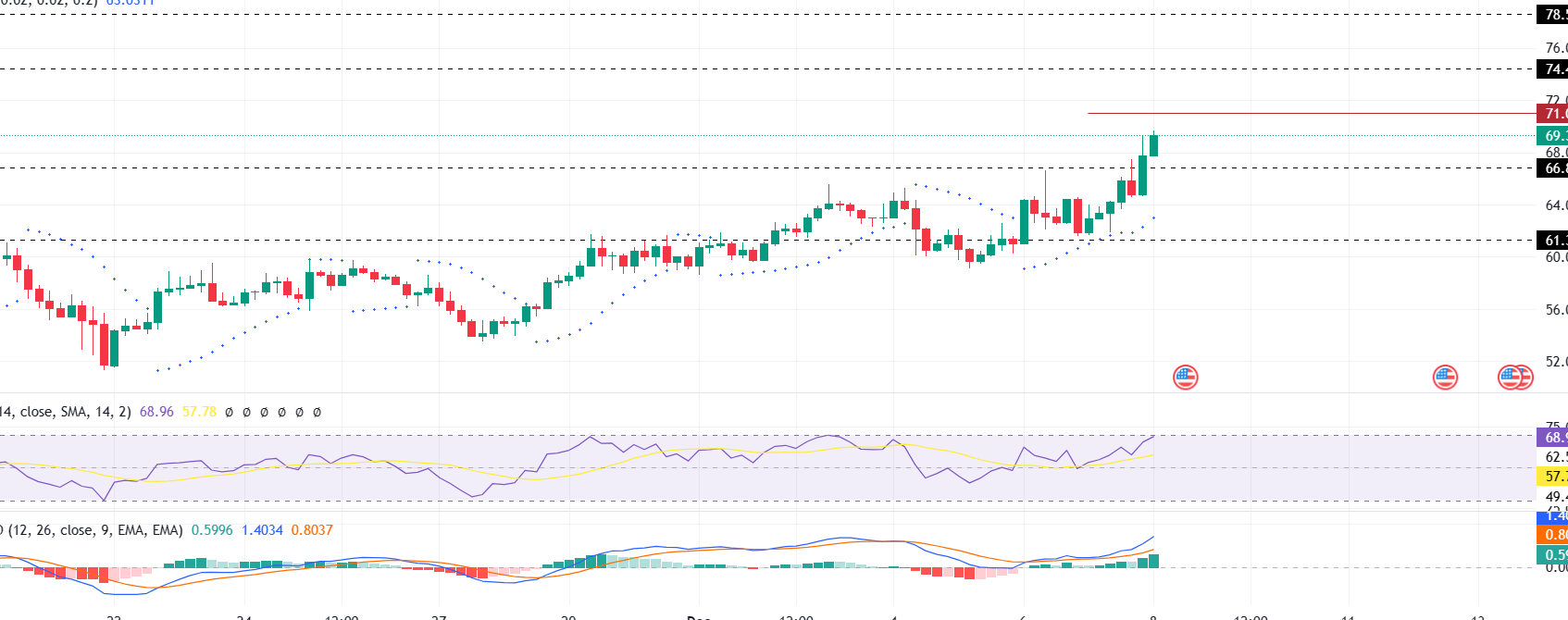
Crypto markets move fast, but they don’t move randomly. After a surge to recent highs, traders typically expect a sharp reversal, a volatility spike, or at least a messy “distribution” phase where confidence breaks down and liquidity dries up. What’s been notable lately is the opposite: Ethereum and major altcoins have helped stabilize market liquidity even as price action cools from those highs. Instead of a sudden vacuum—where bids disappear, spreads widen, and slippage becomes punishing—the market has shown signs of steadier depth, more consistent two-way flow, and a healthier rhythm of rotation.
This matters because market liquidity is the hidden engine of the crypto economy. When liquidity is abundant, price discovery is smoother, large orders are easier to fill, and risk can be transferred without breaking the market. When liquidity is thin, even modest selling can trigger cascading liquidations, exchange order books hollow out, and fear spreads quickly across correlated assets. The post-high environment is often when liquidity conditions are tested the most, because that’s when traders reassess risk, reposition leverage, and decide whether momentum is still worth chasing.
In this stabilization phase, Ethereum and major altcoins play a special role. Ethereum sits at the center of the smart contract economy, where on-chain data reflects real-time demand for blockspace, staking yields, and the activity of decentralized finance users. Major altcoins, meanwhile, influence market liquidity through rotation, sector narratives, and the availability of liquid trading pairs across exchanges. When these assets hold up and trade smoothly after highs, they can prevent liquidity from collapsing across the broader market.
The key idea is not that prices must rise. It’s that market liquidity can stay stable even during consolidation. That is exactly what tends to separate a healthy cooldown from the beginning of a deeper drawdown. To understand why, we need to look at how liquidity forms, what Ethereum contributes to the plumbing of crypto markets, and how major altcoins redistribute capital after momentum peaks.
Understanding Market Liquidity in Crypto
Market liquidity sounds technical, but it’s simple in practice: it’s how easily you can buy or sell without moving the price too much. In crypto, liquidity is shaped by exchange depth, the behavior of market makers, the flow of stablecoins, and the willingness of traders to hold risk overnight. High liquidity typically means tighter spreads, deeper order books, and smaller price impact on big trades. Low liquidity means the opposite: wide spreads, thin depth, and violent candles.

Crypto liquidity is also fragmented. Unlike traditional markets with consolidated venues, crypto trading occurs across centralized exchanges, decentralized exchanges, and cross-chain venues. That fragmentation makes market liquidity more sensitive to sentiment. When fear rises, liquidity can vanish on one platform while staying relatively normal on another, creating inefficiencies that sophisticated traders exploit.
How Liquidity Changes After Recent Highs
After a market prints recent highs, a few things happen almost automatically. Short-term traders take profits, leveraged longs trim risk, and new buyers become more selective. That shift can reduce market liquidity because the “aggressive” side of the market stops chasing. If market makers sense higher risk, they widen spreads and reduce size, which further weakens liquidity.
However, when liquidity stabilizes after highs, it suggests a different kind of market: one where two-way participation remains strong. Traders still place bids on dips, sellers find consistent demand, and the market avoids panic-driven gaps. In that environment, Ethereum and major altcoins can anchor liquidity because they attract both long-term allocators and active traders, creating steady turnover.
Liquidity vs. Volatility: Why They’re Linked
Liquidity and volatility are deeply connected. When market liquidity is high, price movements tend to be smoother because orders meet each other with less friction. When liquidity drops, volatility tends to rise because fewer orders are available to absorb trading pressure. A common post-high pattern is volatility compression during consolidation, followed by either a breakout or breakdown. If liquidity remains stable during compression, the odds of disorderly moves usually decline.
Ethereum’s Role in Stabilizing Market Liquidity
Ethereum is more than a tradable token; it’s the settlement layer for much of the crypto economy. When Ethereum activity is healthy, it supports broader confidence because it implies ongoing usage in decentralized finance, NFT infrastructure, and tokenized assets. That usage creates demand that isn’t purely speculative, which can stabilize market liquidity when traders are deciding whether the recent highs were sustainable.
ETH as a Liquidity Anchor Across Exchanges
ETH is one of the most widely paired assets in crypto. Many altcoins trade against ETH, and ETH pairs remain highly liquid even when smaller markets seize up. That makes Ethereum a kind of liquidity bridge. When traders rotate out of one sector and into another, they often pass through ETH, which increases turnover and helps maintain market liquidity through consistent volume.
ETH also benefits from deep derivatives markets. Futures and options tied to ETH provide tools for hedging and risk transfer. When sophisticated traders can hedge efficiently, they’re more willing to keep providing liquidity—because they can offset exposure quickly. That dynamic helps Ethereum support market liquidity after recent highs, especially when traders want to reduce risk without fully exiting the market.
Staking and Supply Dynamics Supporting Liquidity Conditions
Ethereum’s staking model changes how supply behaves. When more ETH is staked, the liquid supply available for immediate selling may be reduced. While this doesn’t automatically increase market liquidity, it can reduce sudden supply shocks, which helps stabilize trading conditions. If large holders are incentivized to stake for staking yields, they may be less likely to panic sell during consolidation.
At the same time, staking introduces a nuance: if holders decide to unstake en masse, it can add supply pressure. The reason liquidity remains stable in constructive phases is that unstaking tends to be gradual rather than chaotic, especially when market expectations are orderly and on-chain data does not show stress.
DeFi Activity and Liquidity Pools
Ethereum’s DeFi ecosystem supports a different layer of market liquidity through liquidity pools on decentralized exchanges. Even when centralized exchange order books thin out, DeFi can provide alternative routes for trading and arbitrage, which can tighten pricing across venues.
When DeFi usage remains steady after recent highs, it signals that participants aren’t fleeing. That’s important because market liquidity depends not just on speculators, but on active users deploying capital, swapping assets, and managing risk. In periods where Ethereum’s DeFi activity holds up, liquidity often behaves more like a mature market: less prone to sudden air pockets.
Major Altcoins and the Rotation Effect
When Ethereum stabilizes, major altcoins often follow with a rotation pattern rather than a collapse. Rotation means capital moves from overheated assets into laggards or into perceived “quality” altcoins. That movement can stabilize market liquidity because traders stay engaged instead of leaving the market entirely.
Why Altcoins Matter for Liquidity Depth
Major altcoins contribute to market liquidity by expanding the menu of opportunities. If traders only had Bitcoin and Ethereum, capital would concentrate more heavily in those two markets, and risk appetite would swing more violently. With major altcoins offering different narratives—scaling, interoperability, AI, DeFi infrastructure—capital has more pathways to move without exiting crypto.
This matters after recent highs because traders often want to de-risk without abandoning the space. Rotating from a high-beta token into a major altcoin with deeper liquidity can reduce overall market stress while keeping capital circulating.
The Impact of Stablecoins on Altcoin Liquidity
Stablecoins are the lifeblood of crypto market liquidity. When stablecoin supply and velocity are healthy, traders can move between assets quickly without needing to leave the ecosystem. After highs, stablecoin flows can either support stabilization or amplify drawdowns. If stablecoins flood exchanges and sit idle, that can indicate sidelined capital waiting for dips, which supports liquidity. If stablecoin balances drain, it can signal reduced risk appetite and lower liquidity.
Major altcoins benefit disproportionately from healthy stablecoin rails because many altcoin pairs are quoted in stablecoins. That structure makes stablecoins a key liquidity conduit, influencing how easily traders can enter and exit positions without creating large price impact.
Layer-2 Networks and Liquidity Migration
As Ethereum scales through layer-2 networks, liquidity patterns evolve. Some trading and DeFi activity migrates to faster, cheaper environments, changing where liquidity concentrates. That doesn’t necessarily reduce market liquidity; it can redistribute it in a way that keeps the overall system more stable.

When layer-2 ecosystems are active, they can keep users trading, swapping, and deploying capital even if mainnet fees rise. That continuity supports liquidity conditions after recent highs because market participants remain operational rather than pausing activity due to friction.
Signals That Liquidity Is Stabilizing, Not Fading
Stabilizing market liquidity isn’t just a feeling; it shows up in measurable market behavior. Even without diving into charts, you can often see it in how prices react to news, how quickly dips are bought, and whether sudden sell-offs recover.
Tighter Spreads and Stronger Order Books
One of the cleanest signs of stable market liquidity is tighter spreads on major venues. When spreads remain narrow after highs, market makers are still confident enough to quote aggressively. Similarly, when order books show consistent depth near the current price, it means there are real bids and offers, not just thin “ghost liquidity.”
Ethereum and major altcoins usually reflect this first. If ETH pairs remain tight and major altcoin books don’t hollow out, liquidity is more likely stabilizing across the wider market.
Derivatives Funding and Healthy Risk Transfer
Perpetual futures funding rates and options pricing often indicate whether the market is balanced or one-sided. When funding is extreme, it can suggest overcrowding, which can threaten market liquidity if liquidation cascades begin. When funding normalizes after highs, it often means leverage is being managed more responsibly.
Healthy derivatives markets can improve market liquidity by allowing traders to hedge instead of dumping spot positions. That’s one reason Ethereum’s deep derivatives ecosystem can help stabilize liquidity conditions across crypto.
On-Chain Data and Exchange Flows
On-chain data can offer clues about whether liquidity is about to deteriorate. Large inflows of coins to exchanges can hint at selling pressure, while consistent outflows can reflect accumulation or long-term holding. But context matters: sometimes inflows rise because traders want to arbitrage, provide collateral, or rebalance.
If Ethereum and major altcoins show balanced exchange flows—without panic-level spikes—it often aligns with stable market liquidity. The market is active, but not frantic.
Macro Context: Why Liquidity Stability Is Not Guaranteed
Crypto doesn’t exist in a vacuum. Even if Ethereum and major altcoins look stable, market liquidity can be disrupted by macro shocks, regulatory surprises, or sudden risk-off moves in global markets. The difference is that a market already showing stable liquidity tends to absorb shocks better than one already thin.
Risk-On Sentiment and Bitcoin Dominance
Crypto liquidity often cycles between Bitcoin-led phases and altcoin-led phases. When Bitcoin dominance rises, capital concentrates; when it falls, capital spreads into altcoins. Both regimes can support market liquidity, but instability often emerges during abrupt transitions.
If Ethereum and major altcoins stabilize after highs, it can signal that the market is transitioning smoothly rather than violently. In a smooth transition, traders don’t have to rush for the exit. They rotate, hedge, and rebalance, keeping liquidity intact.
Regulation and Market Structure
Regulatory headlines can change liquidity quickly, especially if they affect exchanges, stablecoins, or staking. When uncertainty rises, some market makers step back, which reduces market liquidity. A stabilizing market is one where participants can digest news without spreads exploding and without liquidity evaporating.
Ethereum’s role as infrastructure also matters here: if the ecosystem continues to function normally, and major altcoins retain strong venue support, liquidity stability can persist even amid noise.
Liquidity Fragmentation and Cross-Venue Arbitrage
Because crypto liquidity is fragmented, arbitrage plays a major role in keeping markets efficient. When arbitrage is active, it can stabilize market liquidity by aligning prices across venues and ensuring that liquidity is not trapped in one corner of the market.
Ethereum and major altcoins are prime targets for arbitrage because they trade everywhere. When those markets are smooth, arbitrage becomes easier, which can indirectly support broader liquidity conditions.
What This Means for Traders and Long-Term Investors
Stable market liquidity after highs can change how both traders and investors approach the market. It doesn’t guarantee a new rally, but it can reduce the odds of disorderly breakdowns.
For Traders: Better Execution and Lower Slippage
When market liquidity is stable, traders benefit from better execution. That means less slippage, more predictable fills, and fewer surprise wicks triggered by thin books. Ethereum and major altcoins are often where traders feel this first, because these markets tend to retain depth even when smaller tokens become erratic.
In practice, stable liquidity can make strategies like range trading, hedged carry, and rotation more viable. When liquidity is unstable, those same strategies can be punished by sudden gaps.
For Investors: Healthier Market Structure
Long-term investors care less about intraday execution and more about whether the market structure is improving. Stable market liquidity after highs can signal maturity: fewer forced liquidations, more balanced positioning, and broader participation beyond pure leverage.
Ethereum and major altcoins stabilizing liquidity conditions can also support a healthier environment for building. Projects can plan, users keep transacting, and capital allocation becomes more deliberate rather than purely momentum-driven.
For the Broader Market: A More Durable Cycle
Crypto cycles are often defined by liquidity expansions and contractions. When liquidity expands, prices rise quickly. When liquidity contracts, drawdowns can be brutal. A period where Ethereum and major altcoins stabilize market liquidity after highs can act like a “bridge” phase, where the market consolidates without breaking.
That bridge matters because it can allow the next move—up or down—to happen with less chaos. And markets that move with less chaos tend to attract more participants over time.
Conclusion
After recent highs, the biggest question isn’t just “Will price go up?” It’s “Will the market hold together?” Right now, Ethereum and major altcoins are showing how a post-high market can remain functional by stabilizing market liquidity. Through deep spot and derivatives markets, strong cross-venue participation, active decentralized finance infrastructure, and ongoing rotation flows, these assets can help prevent liquidity from collapsing during consolidation.
Stable market liquidity doesn’t guarantee a bull run. But it does suggest a market that is digesting gains with more discipline, where execution remains reliable, and where risk can be transferred without triggering cascading damage. In a space as fast-moving as crypto, that kind of stability is a signal worth respecting.
FAQs
Q: What does “market liquidity” mean in crypto?
Market liquidity in crypto refers to how easily you can buy or sell an asset without causing a large price change. Higher liquidity usually means tighter spreads, deeper order books, and less slippage during trades.
Q: Why does Ethereum affect liquidity for the whole market?
Ethereum influences market liquidity because it is widely traded, deeply integrated into exchange pairs, and central to decentralized finance activity. When ETH markets remain smooth, they support trading and hedging across many related assets.
Q: Do major altcoins increase or reduce market risk after highs?
Major altcoins can reduce stress if they support rotation rather than panic. When traders rotate into liquid, widely supported altcoins instead of exiting entirely, market liquidity can remain stable even as prices consolidate.
Q: How do stablecoins influence crypto market liquidity?
Stablecoins act as trading fuel. When stablecoin supply and exchange balances are healthy, traders can move between assets efficiently, supporting market liquidity. When stablecoin liquidity tightens, spreads can widen and volatility can rise.
Q: Does stable liquidity mean prices will keep rising?
Not necessarily. Stable market liquidity mainly indicates that trading conditions are healthy and the market is absorbing profit-taking without disorderly breakdowns. Prices can still move either direction, but stable liquidity often reduces the chance of sudden, chaotic moves.