
Since its inception in 2009, Bitcoin has been framed as a decentralized currency designed to operate independently of centralized authorities. The narrative of decentralization has dominated discussions among enthusiasts, regulators, and investors alike. However, a deeper examination reveals that Bitcoin’s true message is not decentralization; it’s emancipation. Bitcoin represents a radical shift in how humans interact with value, privacy, and financial sovereignty, providing tools to liberate individuals from systemic constraints that have long defined global finance.
Decentralization is an important technical feature, but it is not the ultimate objective. Bitcoin’s emancipation lies in its ability to empower individuals to take control of their financial lives, bypass intermediaries, and resist coercive economic structures. It offers not only a new monetary paradigm but also a philosophical lens through which to reconsider personal freedom, societal trust, and access to global commerce.
In this article, we will explore Bitcoin’s deeper significance, examining its financial, social, and political implications. We will analyze why decentralization, while revolutionary, serves merely as a vehicle for emancipation. Through this lens, we can understand Bitcoin as more than a digital asset—it is a tool of liberation.
Understanding Bitcoin Beyond Decentralization
The conventional wisdom positions Bitcoin as the first truly decentralized currency. Its network operates without a central authority, relying instead on a distributed ledger and consensus mechanisms. While this feature is foundational, it does not fully capture the essence of Bitcoin’s impact.
Decentralization addresses trust issues by removing single points of failure. It ensures that no government, corporation, or individual can unilaterally manipulate the system. Yet, decentralization is a means rather than an end. The true transformative potential lies in emancipation—empowering individuals to transact, save, and interact with value without relying on intermediaries. Bitcoin allows users to bypass traditional financial gatekeepers, including banks, payment processors, and regulatory bodies that often restrict access based on geography, wealth, or political context.
Furthermore, decentralization alone does not guarantee financial freedom. Bitcoin’s open-source protocol, combined with its censorship-resistant properties, provides individuals with tools to assert economic autonomy. This distinction is critical: decentralization enables emancipation, but emancipation is the ultimate goal.
Financial Emancipation Through Bitcoin
Bitcoin provides a path to financial freedom that traditional systems cannot replicate. By design, it is borderless, permissionless, and resistant to censorship. Users can store and transfer value without relying on banks, governments, or payment networks. This financial emancipation is particularly impactful in regions with unstable currencies, inflationary pressures, or restrictive capital controls.
For individuals in countries facing hyperinflation, Bitcoin offers a refuge. Unlike fiat currencies, which can be devalued by monetary policy or political instability, Bitcoin’s fixed supply of 21 million coins ensures scarcity and long-term value preservation. This property empowers individuals to protect their wealth from systemic risks that central authorities cannot always mitigate.
Moreover, Bitcoin enables peer-to-peer transactions without intermediaries. Traditional financial systems impose fees, delays, and compliance hurdles that disproportionately affect marginalized populations. With Bitcoin, anyone with internet access can participate in the global economy, achieving economic liberation regardless of location or status.
The ability to self-custody funds further reinforces emancipation. Holding Bitcoin in a personal wallet eliminates dependence on custodial services that can be frozen or restricted. Users gain full control over their assets, a profound form of financial autonomy that underpins Bitcoin’s broader liberatory potential.
Social Implications of Bitcoin Emancipation
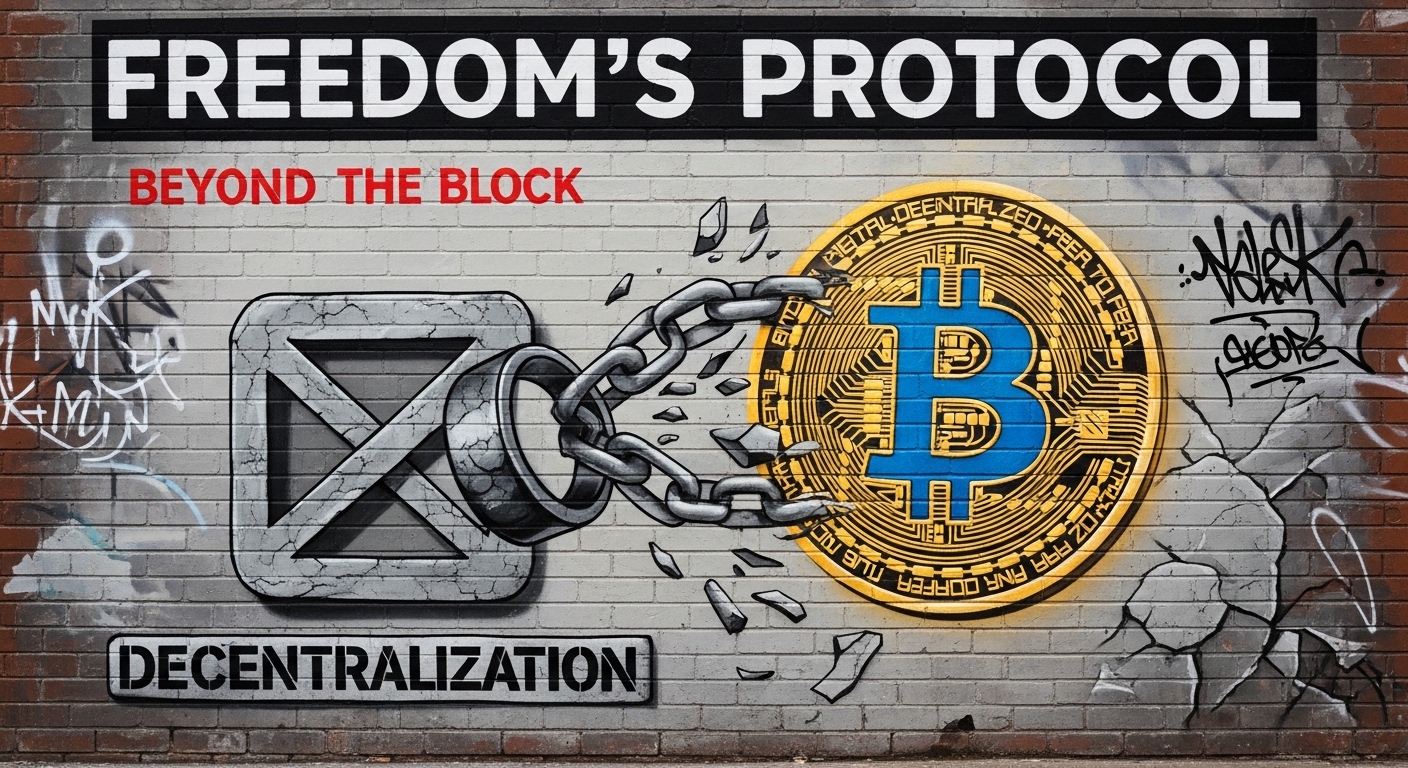
Beyond financial freedom, Bitcoin fosters social emancipation by decentralizing access to value and information. Traditional financial systems often concentrate wealth and influence in the hands of a few. Bitcoin’s open, transparent ledger challenges this dynamic by providing equal access to all participants.
This democratization of finance encourages financial literacy, autonomy, and community engagement. Individuals can educate themselves about money, savings, and investment without gatekeepers. Communities can support local economies through Bitcoin-based transactions, fostering cooperation without centralized oversight.
Furthermore, Bitcoin’s transparency allows for greater accountability. While transactions are pseudonymous, they are verifiable and immutable. This feature enables individuals and communities to participate in financial activities with trust, bypassing intermediaries who may exploit opaque systems. Social emancipation arises from the empowerment of users to manage and verify value independently, reinforcing agency and reducing dependency on hierarchical structures.
Political Emancipation and Sovereignty
Bitcoin’s emancipatory power extends into the political realm. By offering a form of monetary sovereignty, it challenges traditional state control over money. Governments often use fiscal and monetary tools to influence populations, but Bitcoin allows citizens to opt-out of these mechanisms when they perceive them as coercive or misaligned with their interests.
In authoritarian contexts, Bitcoin enables individuals to safeguard wealth from seizure, censorship, or capital restrictions. It creates a parallel system where people can transact freely without requiring government approval. This capacity is a form of political liberation, giving citizens tools to assert independence from oppressive or unstable regimes.
Additionally, Bitcoin encourages discourse on broader governance questions. If value can exist outside state systems, individuals are empowered to reconsider economic policies, taxation, and financial oversight. This encourages participatory democracy and informed civic engagement, further extending Bitcoin’s role as a tool of emancipation.
Technological Foundations Supporting Emancipation
Bitcoin’s technological infrastructure underpins its emancipatory potential. The blockchain ledger, proof-of-work consensus, and cryptographic security collectively enable trustless interactions. Users do not need to rely on centralized authorities because the protocol enforces rules transparently and immutably.
Trustless systems facilitate emancipation by allowing value exchange without intermediaries. This reduces systemic vulnerability and empowers users to transact confidently. Furthermore, innovations such as Lightning Network enhance Bitcoin’s utility by enabling fast, low-cost payments, further expanding access to financial freedom.
By removing friction from peer-to-peer transactions, Bitcoin creates a more inclusive financial ecosystem. Individuals who were previously excluded due to geography, socioeconomic status, or institutional limitations can participate fully, reinforcing the platform’s liberatory purpose.
Bitcoin as a Hedge Against Systemic Risks
A core component of Bitcoin’s message of emancipation is its role as a hedge against traditional financial system failures. Economic crises, bank collapses, and inflationary policies often strip citizens of wealth without recourse. Bitcoin provides an alternative store of value immune to many of these systemic pressures.
Investors and everyday users alike can leverage Bitcoin to diversify portfolios and protect against fiat currency risks. This protective function is inherently emancipatory, offering security and agency in the face of uncertainty. Bitcoin does not eliminate economic challenges, but it offers a tool for individuals to reclaim control over personal wealth.
Furthermore, Bitcoin’s resilience reinforces confidence in decentralized money systems. Users gain a sense of empowerment knowing they can rely on a system that is not contingent upon centralized authorities or fragile institutional trust.
Philosophical Dimensions of Bitcoin Emancipation
Bitcoin embodies a broader philosophical vision of human liberation. Its decentralized architecture is not merely a technical achievement; it symbolizes freedom from coercive financial and political structures. By enabling self-sovereignty, Bitcoin challenges entrenched hierarchies and encourages individuals to rethink their relationship with money, authority, and trust.
The notion that Bitcoin’s true message is not decentralization; it’s emancipation reframes the conversation from technical mechanics to human empowerment. Decentralization is the foundation; emancipation is the aspiration. Bitcoin represents a shift from passive dependence on systems to active participation in the management of value.
This philosophical perspective aligns with historical movements for personal freedom and economic independence. Just as societies have sought autonomy from feudal or centralized control, Bitcoin provides a digital parallel, offering liberation in the context of modern finance.
Challenges to Emancipation

Despite its potential, Bitcoin’s path to full emancipation faces challenges. Regulatory restrictions, market volatility, and technical literacy barriers can limit access. Users must navigate complex security practices, including private key management and secure storage, to maintain autonomy.
Moreover, concentration of mining power and centralized exchanges introduces risks that can undermine the ideals of emancipation. While the protocol itself is trustless, ecosystem dynamics may still create dependency points. Recognizing these challenges is essential for realizing Bitcoin’s full liberatory promise.
Education and adoption play key roles. As awareness grows and technological solutions simplify self-custody, Bitcoin’s emancipatory potential becomes more accessible to the general population.
The Future of Bitcoin Emancipation
Looking forward, Bitcoin’s emancipatory mission may expand through increased integration with global financial systems. Layer two solutions, decentralized finance protocols, and cross-border remittance applications can enhance accessibility and usability.
As adoption grows, Bitcoin may serve as a foundation for alternative financial systems that prioritize individual empowerment over institutional control. Its message of emancipation could inspire complementary innovations, including digital identity, privacy-enhancing technologies, and decentralized governance models.
The long-term vision positions Bitcoin not just as a currency or investment, but as a tool for systemic liberation. Individuals and communities gain agency, creating new pathways for economic, social, and political freedom.
Conclusion
Bitcoin’s true message is not decentralization; it is emancipation. While decentralization is an essential technical feature, the ultimate goal is to empower individuals with financial sovereignty, social agency, and political freedom.
Through self-custody, peer-to-peer transactions, resistance to censorship, and protection against systemic risks, Bitcoin enables individuals to reclaim control over value. Its philosophical, social, and financial implications redefine freedom in the modern age.
As Bitcoin continues to evolve, its role as a tool of emancipation will likely expand, reshaping how humans interact with money, authority, and trust. Recognizing this deeper purpose allows users and policymakers alike to appreciate Bitcoin not merely as a technology, but as a catalyst for human liberation.
FAQs
Q: How does Bitcoin’s message of emancipation differ from decentralization?
Bitcoin’s message of emancipation extends beyond technical decentralization. While decentralization removes central points of control, emancipation focuses on human empowerment, financial freedom, and the ability to transact without reliance on traditional institutions.
Q: In what ways does Bitcoin provide financial emancipation?
Bitcoin provides financial emancipation by enabling borderless, peer-to-peer transactions, protecting against inflation, and offering self-custody of assets. Users gain independence from banks, governments, and intermediaries, achieving control over their wealth.
Q: Can Bitcoin support social and political liberation?
Yes, Bitcoin supports social and political liberation by offering transparency, accessibility, and monetary sovereignty. It enables individuals to transact without censorship, preserves wealth from oppressive policies, and fosters informed participation in financial systems.
Q: What are the challenges to realizing Bitcoin’s emancipatory potential?
Challenges include regulatory restrictions, market volatility, technical barriers, and concentration of mining or exchange services. Education, simplified wallets, and global adoption are critical to overcoming these obstacles.
Q: How might Bitcoin’s emancipatory role evolve in the future?
Bitcoin’s role may expand through integration with decentralized finance, cross-border payments, and privacy-focused technologies. Increased adoption can enhance financial sovereignty and inspire complementary systems that further empower individuals globally.