January delivered one of the clearest signals yet that the cryptocurrency market is evolving beyond pure speculation. While price movements remained volatile, underlying usage metrics told a far more compelling story. On-chain activity surged across major networks, merchant adoption accelerated, and user behavior revealed where momentum is truly building. At the center of this shift was a dramatic increase in active Solana addresses, which spiked by an eye-catching 115% in a single month.
This surge in active Solana addresses was not an isolated data point. It reflected a broader trend toward faster, cheaper, and more accessible blockchain interactions. Solana’s ecosystem became a hub for experimentation, rapid token launches, and high-frequency activity that attracted millions of wallets in a short period. At the same time, Bitcoin continued to strengthen its role beyond investment portfolios, as a growing number of merchants began accepting crypto payments in everyday commerce.
The combination of soaring active Solana addresses and expanding Bitcoin payment acceptance highlights a market entering a new phase. One side is driven by innovation, speed, and cultural momentum on-chain. The other is shaped by trust, brand recognition, and real-world utility. Together, they paint a picture of an industry slowly bridging the gap between digital-native behavior and mainstream financial use.
This article explores the most important insights from the month’s charts, explains why active Solana addresses surged so sharply, examines the growing role of Bitcoin in merchant payments, and analyzes what these trends mean for the future of crypto adoption.
Active Solana addresses surge 115%: understanding the scale of growth
A 115% increase in active Solana addresses within a single month is a rare event, even in crypto markets known for rapid shifts. Daily active addresses climbed into the millions, signaling a level of engagement that few networks have achieved in such a short time frame. This metric tracks the number of wallet addresses interacting with the Solana blockchain each day, offering a snapshot of how intensely the network is being used.
While active Solana addresses do not equate perfectly to unique individuals, they remain one of the best indicators of network demand. A sharp rise typically means more transactions, more applications being used, and more value flowing through the ecosystem. In January, this metric suggested that Solana had captured a disproportionate share of user attention compared to other major blockchains.
The speed at which this growth occurred is particularly notable. Rather than building gradually, active Solana addresses surged rapidly, pointing to a specific catalyst rather than organic background growth. Understanding that catalyst is key to interpreting what this data actually means.
Why daily active addresses matter in crypto markets
Daily active addresses are often described as a “heartbeat” metric for blockchains. When they rise, it indicates that users are actively engaging with the network rather than simply holding assets. For Solana, the explosion in active Solana addresses implied a surge in transactions, token swaps, contract interactions, and new wallet creation.
This metric also provides insight into network health. High activity suggests that infrastructure is being tested under real-world conditions. It shows whether a blockchain can handle bursts of demand without degrading user experience. In Solana’s case, the spike in active Solana addresses reinforced its reputation as a high-throughput network designed for consumer-scale usage.
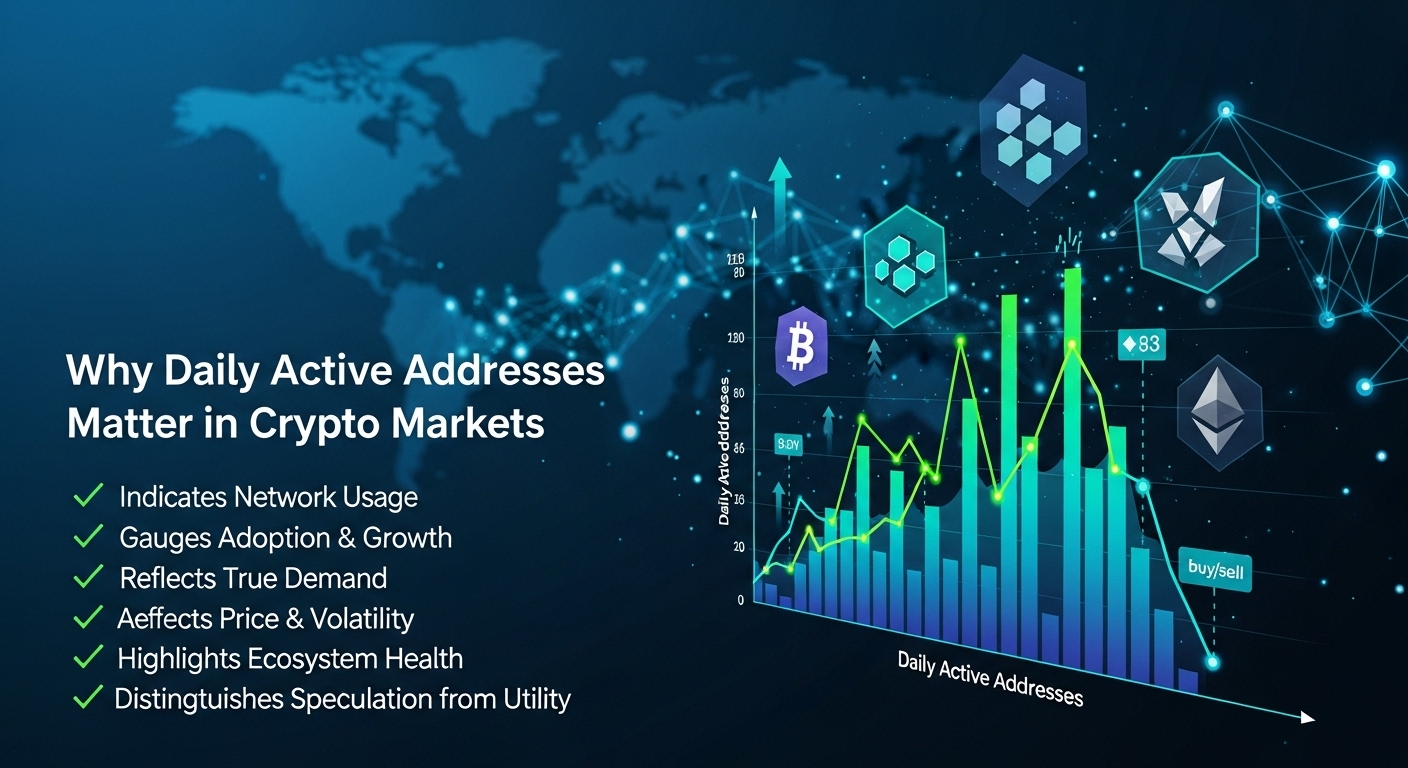
However, it is important to interpret the metric carefully. One user can control multiple addresses, and automated systems can inflate numbers. Even so, a sustained rise in active Solana addresses almost always reflects genuine momentum within an ecosystem.
The memecoin effect and rapid token creation
One of the primary drivers behind the surge in active Solana addresses was a renewed wave of token creation and speculative trading. Solana’s low fees and fast transaction times make it an ideal environment for launching new tokens, particularly memecoins that thrive on speed and virality.
As tooling improved, the time required to create and distribute a new token dropped dramatically. What once took hours or days could now be completed in minutes. This ease of creation encouraged experimentation and fueled a cascade of on-chain activity. Each token launch triggered a chain reaction of wallet interactions, swaps, liquidity provision, and transfers, all of which contributed to the rise in active Solana addresses.
Memecoins play a unique role in crypto culture. While often dismissed as frivolous, they function as powerful onboarding mechanisms. They attract new users, incentivize wallet creation, and encourage hands-on interaction with blockchain technology. In January, this dynamic was clearly visible in Solana’s usage metrics.
Application fees and economic signals beneath the activity
Despite Solana’s reputation for low transaction costs, the spike in active Solana addresses also led to a notable increase in application-level fees. Certain platforms within the ecosystem generated millions of dollars in fees during peak activity days, a sharp contrast to previous periods of relatively modest revenue.
This phenomenon highlights an important economic principle: low fees do not mean low value. When transaction costs are minimal, users are more willing to interact frequently. As volume increases, total fee generation can grow significantly even if individual transactions remain inexpensive.
What rising fees reveal about user behavior
Rising application fees during a period of growing active Solana addresses indicate that users are engaging deeply rather than passively. They are willing to pay for priority, access, and opportunity. This behavior suggests confidence in the ecosystem and a belief that on-chain activity can deliver value, whether through profit, community participation, or experimentation.
Fee spikes also act as stress tests. They reveal whether infrastructure can scale under pressure and whether applications are resilient during periods of intense demand. For developers and investors alike, this data provides valuable insight into which platforms can handle growth sustainably.
Ethereum’s steady growth offers a contrasting narrative
While active Solana addresses dominated headlines with explosive growth, Ethereum followed a more measured path. Daily active addresses on Ethereum increased at a slower pace, reflecting a focus on long-term scalability and efficiency rather than sudden surges driven by speculative cycles.
Ethereum’s recent upgrades aimed to reduce transaction costs and improve data availability. These improvements lowered average fees and made the network more accessible for users and developers. The result was a gradual increase in activity that emphasized reliability over rapid expansion.
Infrastructure-first versus experimentation-first
The contrast between Ethereum and Solana in January illustrates two different growth philosophies. Solana’s surge in active Solana addresses was fueled by experimentation, speed, and cultural momentum. Ethereum’s growth was driven by infrastructure improvements and long-term planning.
Both approaches have merit. Rapid experimentation can attract attention and users quickly, while infrastructure-focused development builds trust and resilience. The coexistence of these models suggests that the crypto ecosystem is diversifying rather than converging on a single dominant strategy.
Four in 10 merchants accept Bitcoin: crypto reaches the checkout
Beyond on-chain metrics, January also delivered meaningful progress in real-world adoption. Approximately four in 10 merchants in the United States now accept crypto payments, with Bitcoin leading the way. This milestone reflects a shift in perception from crypto as a speculative asset to crypto as a functional payment option.
Merchant adoption is one of the strongest indicators of mainstream acceptance. Businesses are unlikely to integrate new payment methods unless they see clear benefits, whether through customer demand, lower fees, or competitive differentiation. The growing acceptance of Bitcoin signals that crypto is beginning to meet those criteria.
Why Bitcoin dominates merchant adoption
Bitcoin remains the most widely recognized cryptocurrency, making it the natural starting point for merchants exploring crypto payments. Its brand recognition and long-standing presence in the market inspire confidence among both businesses and consumers.
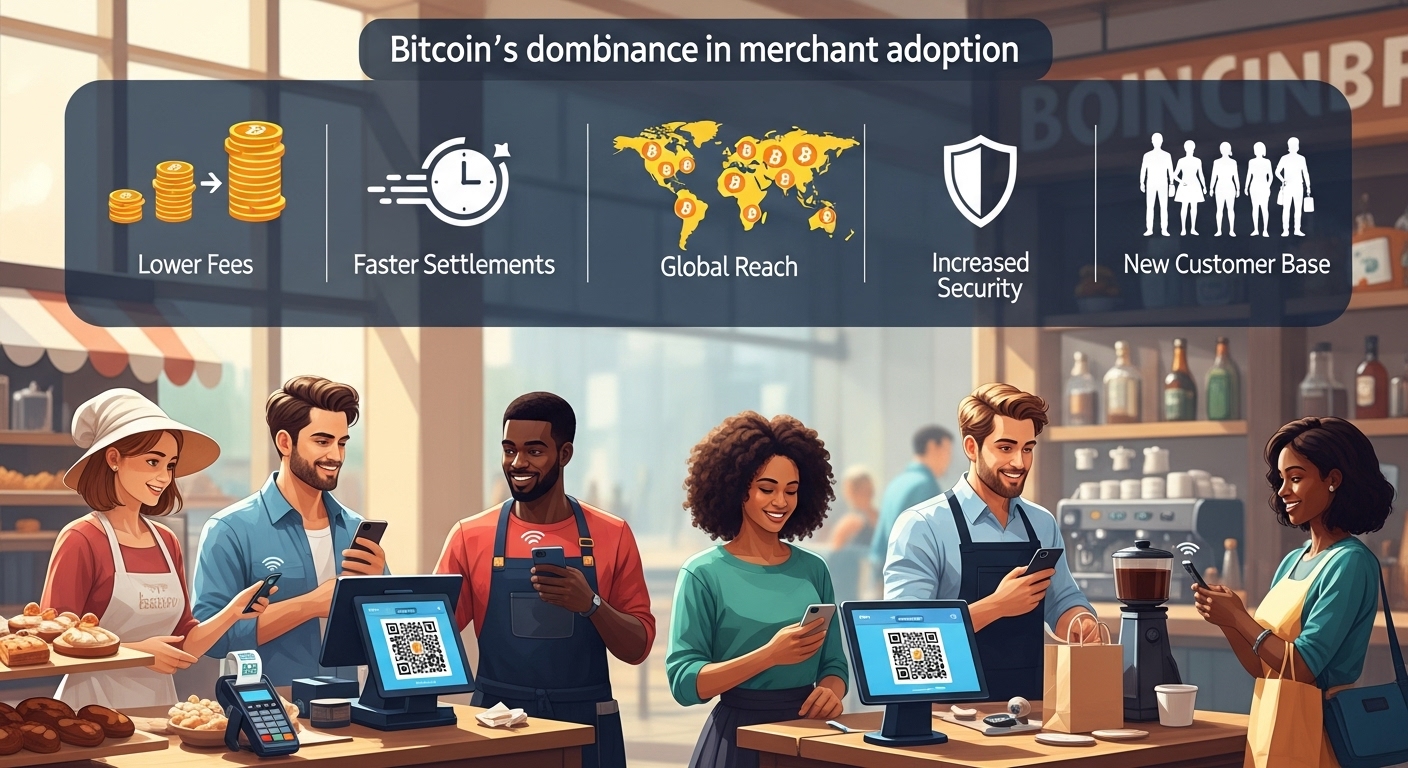
For merchants, accepting Bitcoin is often less about ideology and more about practicality. Payment processors can convert Bitcoin to local currency instantly, reducing volatility risk. Customers who prefer crypto payments tend to be highly engaged and loyal, providing an additional incentive for adoption.
The role of customer demand in payment decisions
Merchant adoption of crypto is increasingly driven by customer expectations. As more consumers hold digital assets, they want the option to spend them. Businesses that offer crypto payments signal openness to innovation and align themselves with emerging consumer preferences.
This dynamic creates a feedback loop. As more merchants accept Bitcoin, consumers become more comfortable using it for everyday transactions. Increased usage reinforces the perception of crypto as a legitimate payment method, encouraging further adoption.
Connecting active Solana addresses with merchant crypto adoption
At first glance, the surge in active Solana addresses and the rise in Bitcoin merchant adoption may appear unrelated. One reflects on-chain experimentation, the other off-chain utility. Yet both trends stem from the same underlying driver: improved usability.
When blockchain interactions become faster, cheaper, and simpler, users participate more. When payments become easier to integrate and manage, merchants adopt them more readily. Usability acts as the bridge between technological innovation and mainstream acceptance.
Over time, these trends may converge further. Fast blockchains can support payment infrastructure behind the scenes, while Bitcoin remains the consumer-facing asset. Together, they form a layered ecosystem where different technologies serve different roles.
Market volatility versus adoption momentum
January also demonstrated that adoption metrics can improve even during periods of price volatility. Bitcoin experienced price fluctuations influenced by macroeconomic and geopolitical factors, yet merchant adoption continued to grow. Similarly, active Solana addresses surged despite broader market uncertainty.
This decoupling of usage from price is a sign of maturation. It suggests that crypto is developing intrinsic value beyond speculative trading. Users and businesses are engaging with the technology because it offers utility, not just because prices are rising.
What to watch in the coming months
The key question following January’s surge is sustainability. Will active Solana addresses remain elevated once the memecoin frenzy cools? Will merchant crypto payments translate into meaningful transaction volume rather than symbolic acceptance?
Long-term adoption will depend on continued improvements in user experience, regulatory clarity, and integration with existing financial systems. Metrics that combine on-chain activity with real-world usage will provide the clearest signals of progress.
Conclusion
January’s data reveals an industry moving forward on two parallel tracks. On-chain innovation accelerated dramatically, as evidenced by the 115% spike in active Solana addresses. At the same time, real-world adoption advanced steadily, with four in 10 merchants now accepting Bitcoin and other cryptocurrencies.
These trends show that crypto is no longer confined to speculative cycles. It is becoming both a playground for experimentation and a practical tool for commerce. The ecosystems that thrive in the next phase will be those that balance speed with stability, innovation with usability, and on-chain excitement with off-chain trust.
FAQs
Q: What are active Solana addresses?
Active Solana addresses refer to wallet addresses that interact with the Solana blockchain within a given period, typically daily. They provide insight into how actively the network is being used.
Q: Why did active Solana addresses increase so sharply?
The surge in active Solana addresses was driven by rapid token creation, memecoin trading, and improved tools that made on-chain participation faster and easier.
Q: Do active addresses represent unique users?
Not exactly. One user can control multiple addresses, and automated activity can inflate counts. However, large increases usually indicate genuine growth in network engagement.
Q: Why are merchants adopting Bitcoin payments?
Merchants adopt Bitcoin due to customer demand, brand recognition, and improved payment infrastructure that reduces volatility and operational complexity.
Q: What does this month’s data suggest about crypto’s future?
The combination of rising active Solana addresses and expanding merchant adoption suggests that crypto is transitioning toward broader, more sustainable use across both digital and real-world environments.