Global financial ecosystem is under constant pressure to operate faster, more securely, and at a lower cost. Despite massive investments in digital infrastructure, banks and financial institutions still rely heavily on fragmented systems that struggle to communicate with one another. This fragmentation creates inefficiencies, increases operational expenses, and opens the door to fraud. Against this backdrop, the Microsoft and R3 blockchain partnership has emerged as a strategic initiative designed to fundamentally change how financial institutions share data, execute transactions, and manage trust.
Rather than focusing on speculative cryptocurrency use cases, the partnership is rooted in enterprise blockchain technology built specifically for regulated industries. By combining Microsoft’s cloud computing expertise with R3’s blockchain platform, Corda, the collaboration aims to create secure, scalable, and cost-efficient systems that allow organizations to transact with confidence. The central promise of the Microsoft and R3 blockchain partnership is simple but powerful: reduce fraud by improving transparency and data integrity, and reduce costs by eliminating duplication and manual processes.
This article explores how this partnership works, why it matters, and how it is shaping the future of financial services. From fraud prevention to operational efficiency, the collaboration between Microsoft and R3 offers valuable insights into how blockchain technology can deliver real-world business value.
The financial industry’s long-standing challenges
For decades, financial institutions have operated within a complex web of legacy systems. Each bank, insurer, or financial intermediary maintains its own records, reconciles transactions independently, and applies its own compliance checks. While this model has functioned historically, it has become increasingly inefficient in a global, digital economy.
Fraud thrives in environments where information is delayed, duplicated, or inconsistent. When multiple parties maintain separate records of the same transaction, discrepancies are inevitable. These discrepancies can be exploited by bad actors or simply result in costly disputes that consume time and resources. At the same time, operational costs rise as institutions invest heavily in reconciliation teams, manual audits, and exception handling.
The Microsoft and R3 blockchain partnership directly addresses these pain points by introducing a shared infrastructure that allows trusted participants to agree on transaction data in real time. Instead of reconciling after the fact, organizations can operate from a synchronized source of truth, dramatically reducing friction across the system.
Understanding the Microsoft and R3 blockchain partnership
At its core, the Microsoft and R3 blockchain partnership brings together two complementary strengths. Microsoft contributes its global cloud platform, enterprise security capabilities, and deep experience supporting mission-critical systems. R3 contributes Corda, a blockchain platform designed specifically for businesses that require privacy, scalability, and regulatory compliance.
Unlike public blockchains, Corda is a permissioned distributed ledger. This means that only authorized participants can access the network, and data is shared strictly on a need-to-know basis. This architecture aligns well with the requirements of financial institutions, where confidentiality and compliance are non-negotiable.
By deploying Corda on Microsoft Azure, organizations gain access to cloud-based infrastructure that supports secure identity management, encryption, monitoring, and high availability. The Microsoft and R3 blockchain partnership ensures that blockchain solutions are not isolated experiments but fully integrated components of an enterprise IT environment.
Why blockchain is central to reducing fraud
Fraud in financial services is often enabled by opacity. When transactions pass through multiple intermediaries and systems, it becomes difficult to trace their origin, verify their authenticity, or detect anomalies in a timely manner. Traditional systems rely on trust in centralized authorities or delayed audits, which can be insufficient in complex, high-volume environments.
The Microsoft and R3 blockchain partnership leverages blockchain’s core strengths to address these weaknesses. Distributed ledgers create records that are cryptographically secured and resistant to tampering. Each transaction is linked to the one before it, forming a transparent and verifiable history.
In a permissioned blockchain environment like Corda, this transparency is balanced with privacy. Participants can verify the validity of a transaction without exposing sensitive business information to unauthorized parties. This selective transparency helps reduce fraud while preserving confidentiality.
How shared data integrity limits fraudulent behavior
One of the most effective ways to combat fraud is to ensure that all legitimate participants are working from consistent and verified data. In traditional systems, fraud can occur when the same asset or obligation is represented differently across multiple databases. Duplicate financing, falsified documentation, and manipulated records are all examples of this vulnerability.
The Microsoft and R3 blockchain partnership minimizes these risks by enabling shared data integrity. When a transaction is recorded on a distributed ledger, all authorized parties see the same version of the truth. Any attempt to alter that record would be immediately evident, making fraud significantly harder to execute.
This shared integrity also simplifies audits and investigations. Instead of piecing together information from disparate systems, auditors and compliance teams can rely on a clear and consistent transaction history, reducing both time and cost.
Reducing operational costs through process automation
While fraud prevention is a major benefit, cost reduction is equally central to the Microsoft and R3 blockchain partnership. Financial institutions spend enormous sums maintaining complex back-office operations that exist primarily to reconcile data between systems. These processes add little strategic value but are necessary under traditional architectures.
Blockchain technology enables a shift from reconciliation to synchronization. When transactions are executed on a shared ledger, there is no need for each party to independently verify and reconcile records. This reduces the volume of exceptions, shortens settlement cycles, and lowers operational expenses.
By hosting these solutions on Azure, organizations can further reduce costs associated with infrastructure management. Cloud-based deployment allows for scalable resources, automated updates, and centralized monitoring, freeing internal teams to focus on higher-value activities.
The role of Azure in enterprise blockchain adoption
Enterprise adoption of blockchain requires more than just innovative software. It demands robust infrastructure that meets strict standards for security, availability, and performance. This is where Microsoft Azure plays a critical role in the Microsoft and R3 blockchain partnership.
Azure provides a foundation that supports identity management, access control, encryption, and compliance reporting. These capabilities are essential for financial institutions operating in highly regulated environments. By integrating Corda with Azure services, organizations can deploy blockchain networks that align with existing governance and risk frameworks.
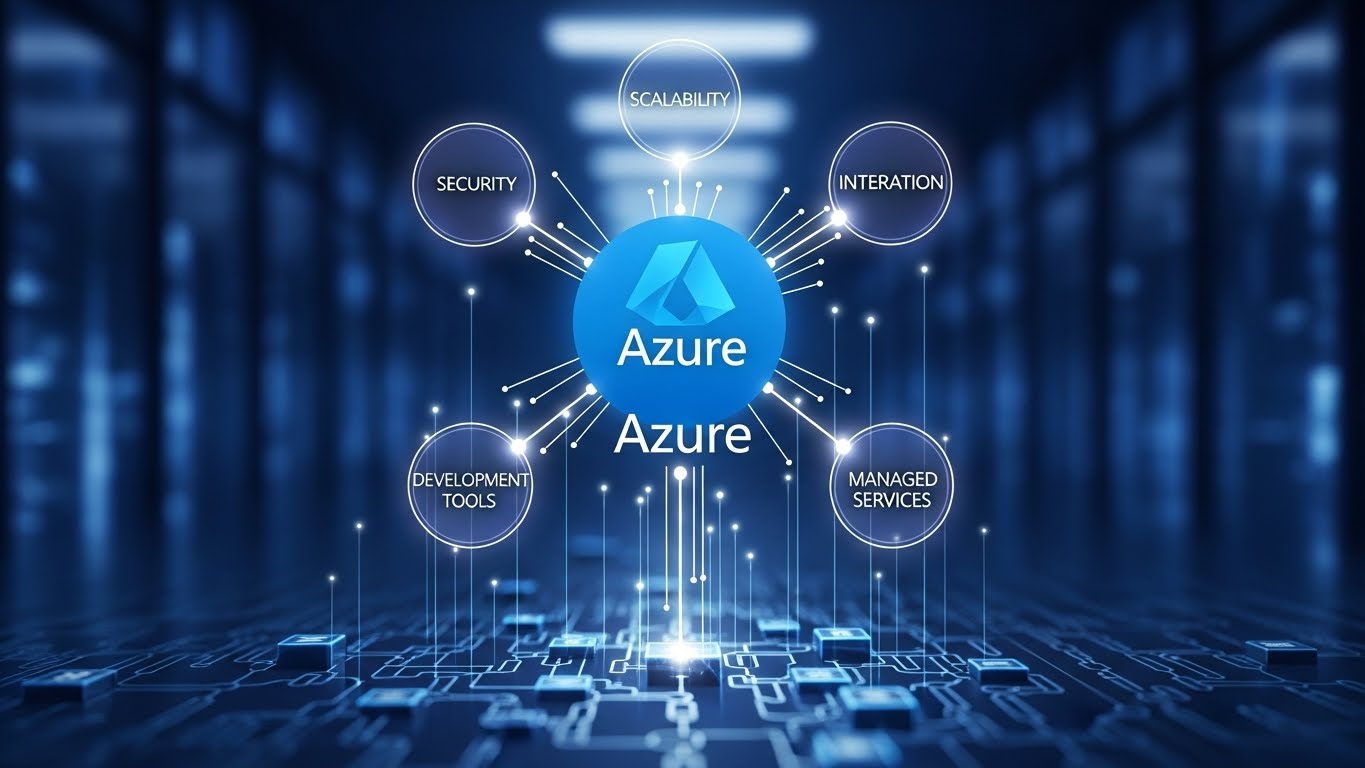
Additionally, Azure’s global footprint allows blockchain networks to scale across regions while maintaining consistent performance. This scalability is crucial for multinational institutions that operate across jurisdictions and time zones.
Real-world financial use cases
The practical value of the Microsoft and R3 blockchain partnership becomes clear when examining real-world use cases. In trade finance, for example, transactions often involve numerous parties, including exporters, importers, banks, insurers, and logistics providers. Each participant maintains separate records, leading to delays, disputes, and fraud risks.
A blockchain-based trade finance solution enables participants to share verified documentation and transaction states securely. This reduces reliance on paper documents, speeds up processing, and limits opportunities for fraud. Similar benefits apply in capital markets, where post-trade processes such as settlement and reconciliation are costly and time-consuming.
Insurance is another area where the partnership shows promise. Claims processing often involves verifying events, policies, and payments across multiple organizations. A shared ledger can streamline this process, reduce disputes, and improve fraud detection.
Governance and trust in distributed networks
Technology alone cannot create trust. Effective governance is essential for any multi-party network, especially in regulated industries. The Microsoft and R3 blockchain partnership supports governance by enabling clear rules around participation, data access, and network operations.
Permissioned blockchain networks allow organizations to define who can join, what data they can see, and what actions they can perform. This structure supports compliance with regulatory requirements while still enabling collaboration. Combined with Azure’s enterprise-grade monitoring and logging, it provides a strong foundation for accountability and oversight.
Balancing innovation with regulatory compliance
One of the reasons blockchain adoption has been slow in financial services is concern about regulatory uncertainty. Institutions must ensure that new technologies do not compromise compliance obligations or expose them to additional risk.
The Microsoft and R3 blockchain partnership is designed with these concerns in mind. By focusing on permissioned networks, privacy controls, and auditability, the partnership aligns blockchain innovation with regulatory expectations. This makes it easier for institutions to experiment, deploy, and scale solutions without stepping outside established risk frameworks.
Challenges and realistic expectations
Despite its advantages, the Microsoft and R3 blockchain partnership is not a silver bullet. Successful implementation requires collaboration between organizations, alignment on standards, and integration with existing systems. Cultural resistance, legacy dependencies, and governance complexity can all slow adoption.
However, the partnership provides a practical pathway forward. By combining enterprise blockchain technology with cloud-based infrastructure, it lowers many of the barriers that have historically limited blockchain adoption. Over time, as more institutions participate and standards mature, the benefits are likely to compound.
Conclusion
The Microsoft and R3 blockchain partnership represents a significant step toward addressing some of the financial industry’s most persistent challenges. By enabling secure, shared workflows on a permissioned distributed ledger, the partnership aims to reduce fraud, lower operational costs, and improve efficiency across complex financial processes.
Rather than pursuing blockchain as a theoretical innovation, Microsoft and R3 have focused on real-world applicability. Their collaboration demonstrates how enterprise blockchain, when combined with cloud infrastructure, can deliver measurable value in regulated environments. As financial institutions continue to seek ways to build trust, control risk, and operate more efficiently, the impact of this partnership is likely to grow.
FAQs
Q: What is the main purpose of the Microsoft and R3 blockchain partnership?
The partnership aims to help financial institutions reduce fraud and operational costs by using enterprise blockchain technology deployed on a secure and scalable cloud platform.
Q: How does the partnership help prevent fraud?
It improves data integrity, creates tamper-resistant transaction records, and enables shared verification among authorized participants, making fraudulent activities harder to execute and easier to detect.
Q: Why is Corda suitable for financial institutions?
Corda is designed for regulated industries, offering privacy, permissioned access, and compliance-friendly architecture that aligns with financial and legal requirements.
Q: How does Microsoft Azure contribute to the partnership?
Azure provides the cloud infrastructure, security services, identity management, and scalability needed to run enterprise blockchain networks reliably and securely.
Q: Is the Microsoft and R3 blockchain partnership limited to banking?
While it is heavily focused on banking and financial services, the underlying technology can also be applied to insurance, trade finance, and other industries that require secure multi-party coordination.
Also More: Blockchain Technology in Africa: Viability Future Potential