
Ripple continues to strengthen its position as one of the most influential infrastructure providers in the digital asset industry, and its latest partnership expansion highlights a strategic shift toward large-scale, real-world adoption. Rather than focusing on speculative narratives, Ripple is doubling down on enterprise-grade payment rails, stablecoin infrastructure, and seamless fiat-to-crypto connectivity. This approach is designed to reach millions of users indirectly—through financial institutions, fintech platforms, and global businesses that already serve massive customer bases.
At the center of this development is the extension of a major crypto infrastructure partnership that integrates traditional financial systems with blockchain-based settlement. By combining regulated fiat rails, stablecoin issuance, and cross-border payment technology into a unified platform, Ripple is positioning itself as a bridge between legacy finance and the next generation of digital payments. The result is an ecosystem where blockchain technology becomes invisible to end users, operating quietly in the background while enabling faster, cheaper, and more transparent value transfer.
This article explores how Ripple’s expanding partnership unlocks access to millions, why stablecoin infrastructure plays a crucial role in this strategy, how enterprise adoption accelerates network effects, and what this means for the future of global payments and blockchain finance.
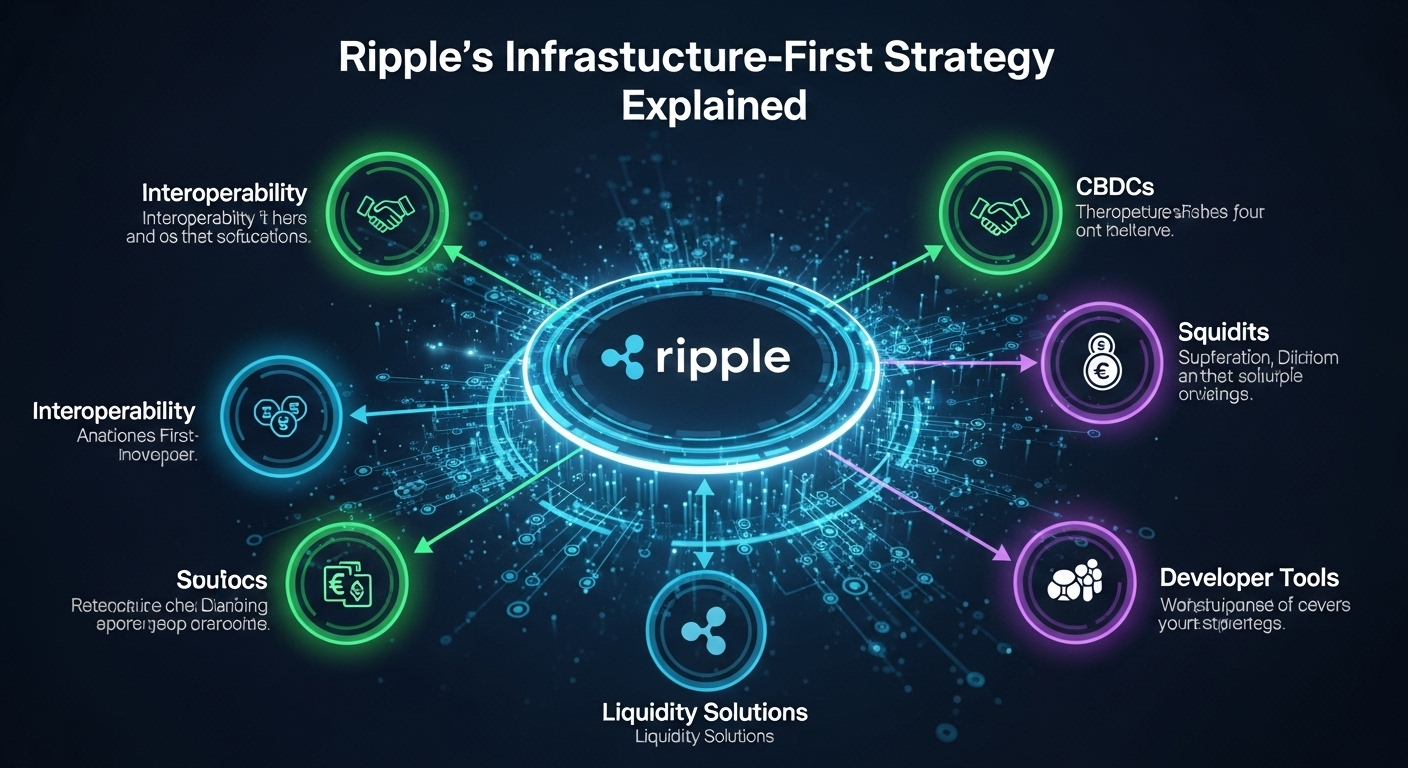
Ripple’s Infrastructure-First Strategy Explained
Ripple’s long-term vision has always revolved around infrastructure rather than consumer hype. Instead of competing directly with retail trading apps or consumer wallets, Ripple focuses on building the underlying rails that financial institutions rely on. This includes payment settlement technology, liquidity solutions, custody services, and stablecoin infrastructure that can operate at enterprise scale.
By prioritizing compliance, reliability, and interoperability, Ripple appeals to banks, fintech firms, payment processors, and multinational businesses. These entities already manage enormous transaction volumes and user bases. When Ripple’s technology becomes embedded into their operations, adoption scales naturally—often without users realizing blockchain technology is involved at all.
The extension of Ripple’s crypto infrastructure partnership reinforces this strategy. The partnership integrates global fiat payment rails with blockchain-based settlement, allowing businesses to move seamlessly between traditional currencies and digital assets. This creates a unified financial layer where money can flow efficiently across borders, platforms, and asset types.
Why infrastructure partnerships matter more than consumer apps
Consumer adoption in crypto is often volatile, driven by market cycles and sentiment. Infrastructure adoption, on the other hand, tends to be slower but far more durable. Once a bank or enterprise integrates a payment rail or stablecoin solution into its core systems, switching costs become high.
Ripple’s partnerships target this exact dynamic. By embedding its technology into enterprise workflows—such as treasury management, cross-border settlements, and liquidity provisioning—Ripple gains long-term relevance. As these enterprises serve millions of customers, Ripple’s reach expands organically.
The Role of Fiat Rails in Unlocking Mass Adoption
One of the biggest barriers to crypto adoption has always been the disconnect between traditional finance and blockchain networks. Ripple’s partnership extension directly addresses this issue by integrating robust fiat infrastructure with digital asset settlement.
Fiat rails such as real-time payments, multi-currency accounts, and virtual banking identifiers allow businesses to interact with blockchain technology without abandoning familiar financial systems. This hybrid approach reduces friction and lowers the learning curve for enterprises entering the digital asset space.
Seamless fiat-to-stablecoin conversion
A key feature of the expanded partnership is the ability for enterprises to convert fiat currencies directly into stablecoins and back again. This capability simplifies treasury operations, cross-border payments, and liquidity management. Instead of juggling multiple providers for banking, crypto custody, and settlement, businesses can access everything through a single integrated platform.
This seamless conversion process is essential for scaling adoption. Enterprises want predictability, speed, and regulatory clarity. By offering stablecoin access through trusted fiat infrastructure, Ripple makes blockchain settlement practical rather than experimental.
Why Stablecoins Are Central to Ripple’s Expansion
Stablecoins have emerged as one of the most practical applications of blockchain technology. Unlike volatile cryptocurrencies, stablecoins are designed to maintain a consistent value, making them suitable for payments, settlements, and treasury functions.
Ripple’s enterprise-focused stablecoin plays a central role in its infrastructure expansion. Built with compliance and transparency in mind, it is designed specifically for institutional use cases rather than retail speculation. This positioning aligns with Ripple’s broader goal of becoming a trusted financial infrastructure provider.
Stablecoins as a settlement layer
In traditional finance, settlement can take days, especially across borders. Stablecoins enable near-instant settlement while maintaining a familiar unit of account. For businesses operating globally, this can significantly reduce costs and operational complexity.
By integrating stablecoin functionality directly into its payment infrastructure, Ripple allows enterprises to use digital assets as a settlement layer without changing their front-end user experience. Payments can still feel like traditional bank transfers, while the backend benefits from blockchain efficiency.
Enterprise Distribution: How Ripple Reaches Millions Indirectly
Ripple’s path to mass adoption does not rely on convincing millions of individuals to download a new app. Instead, it focuses on enterprise distribution. When a payment processor, fintech platform, or multinational company integrates Ripple’s infrastructure, that integration can affect millions of end users automatically.
This indirect distribution model is common in financial infrastructure. Credit card networks, for example, do not interact directly with most consumers, yet they facilitate billions of transactions worldwide. Ripple aims to occupy a similar position within the blockchain ecosystem.
Embedded finance and network effects
As more enterprises adopt Ripple’s infrastructure, network effects begin to emerge. Liquidity improves, settlement becomes more efficient, and interoperability across platforms increases. These improvements make the system more attractive to additional partners, creating a virtuous cycle of adoption.
Embedded finance plays a crucial role here. When blockchain settlement and stablecoin functionality are embedded into existing financial products, users benefit without needing to understand the underlying technology. This invisibility is often a sign of mature infrastructure.
Institutional Expansion Strengthens the Ecosystem
Ripple’s infrastructure strategy extends beyond payments into institutional market structure. By supporting regulated execution, clearing, and liquidity provisioning, Ripple strengthens the foundation that enterprise payment systems depend on.
Institutional partnerships enhance confidence in the ecosystem. When hedge funds, asset managers, and professional trading firms have access to reliable digital asset infrastructure, liquidity deepens and volatility can decrease. This stability benefits payment use cases, which require predictable settlement conditions.
Why institutions matter for payments
Payments and trading may seem like separate domains, but they are deeply connected through liquidity and settlement reliability. A robust institutional ecosystem ensures that stablecoins and digital assets used in payments are backed by deep, resilient markets.
Ripple’s institutional expansion supports its broader mission by ensuring that the infrastructure powering enterprise payments is supported by strong market foundations.
Cross-Border Payments Reimagined
Cross-border payments remain one of the most expensive and inefficient aspects of global finance. Multiple intermediaries, currency conversions, and settlement delays increase costs for businesses and consumers alike.

Ripple’s expanded partnership addresses these pain points by combining blockchain settlement with global fiat connectivity. This approach allows payments to move quickly across borders while maintaining compliance with local regulations.
Faster settlement without sacrificing trust
Speed alone is not enough for enterprise adoption. Payments must also be transparent, traceable, and compliant. Ripple’s infrastructure is designed to meet these requirements, making it suitable for regulated financial institutions.
By improving both speed and trust, Ripple positions its technology as a viable alternative to legacy cross-border payment systems.
Challenges and Considerations Ahead
Despite the promise of expanded infrastructure partnerships, challenges remain. Regulatory uncertainty, integration complexity, and competition from other payment networks could slow adoption.
Enterprises must conduct thorough compliance reviews before adopting stablecoin infrastructure. Additionally, operational reliability is critical—any downtime or settlement issues can have significant consequences at scale.
Competition is also intensifying, with multiple fintech and blockchain companies racing to offer similar solutions. Ripple’s success will depend on execution, partner support, and continued innovation.
What the Future Holds for Ripple and Enterprise Blockchain
If Ripple continues to extend partnerships that unify fiat and blockchain infrastructure, it could play a central role in the evolution of global finance. The focus on enterprise adoption, stablecoin settlement, and compliant infrastructure positions Ripple for long-term relevance.
Future growth will likely involve additional corridors, deeper liquidity integration, and expanded use cases beyond payments. As blockchain technology becomes more integrated into everyday financial operations, Ripple’s infrastructure-first approach may prove to be its greatest strength.
Conclusion
Ripple’s expanded crypto infrastructure partnership represents more than just another collaboration—it reflects a deliberate strategy to power the next generation of global finance. By integrating fiat rails, stablecoin settlement, and enterprise-grade payment technology into a unified platform, Ripple is unlocking access to millions of users through indirect but powerful distribution channels.
Rather than chasing short-term trends, Ripple is building the plumbing that modern finance depends on. If this strategy continues to gain traction, blockchain technology may finally achieve mainstream adoption—not through hype, but through infrastructure that simply works.
FAQs
Q: How does Ripple’s partnership expansion help reach millions of users?
Ripple focuses on enterprise infrastructure. When large financial platforms integrate its technology, millions of end users gain access indirectly through existing products and services.
Q: Why are stablecoins important to Ripple’s strategy?
Stablecoins enable fast, reliable settlement without price volatility. This makes them ideal for enterprise payments, treasury operations, and cross-border transactions.
Q: Is Ripple targeting consumers or businesses?
Ripple primarily targets businesses, financial institutions, and infrastructure providers rather than individual consumers.
Q: How does fiat integration improve blockchain adoption?
Fiat integration reduces friction by allowing businesses to interact with blockchain technology using familiar financial systems, lowering barriers to entry.
Q: What risks could affect Ripple’s expansion?
Regulatory challenges, operational complexity, and competition from other payment networks are key risks that could impact adoption.
Also Read: Ripple Founds French XRPL Foundation After SEC Win