Cryptocurrency market has long been dominated by U.S. dollar-backed stablecoins, but a dramatic shift is now underway. A Russian Ruble-Pegged Stablecoin has reportedly surpassed $100 billion in total transactions in less than one year, marking one of the fastest adoption curves ever seen for a non-USD stable digital asset.
This sudden rise is not just another crypto growth story. It reflects deeper changes in global finance, cross-border payments, and the growing role of blockchain technology in regions facing financial restrictions. As traditional banking channels become harder to access, digital assets tied to local currencies are stepping in to fill the gap.
In this article, we explore how a Russian Ruble-Pegged Stablecoin reached such a massive transaction volume so quickly, what makes it different from dollar-based stablecoins, and why its rise is drawing global attention. We also examine the risks, regulatory concerns, and what this development means for the future of stablecoins worldwide.
Understanding a Russian Ruble-Pegged Stablecoin
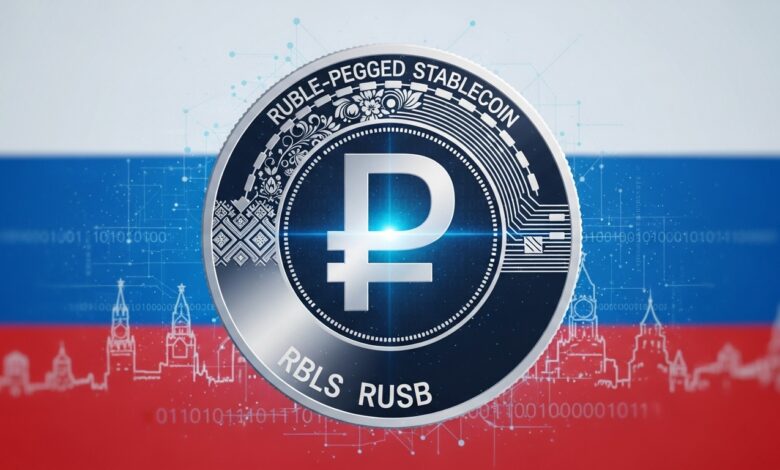
A Russian Ruble-Pegged Stablecoin is a digital asset designed to maintain a stable value by being linked directly to the Russian ruble. Unlike volatile cryptocurrencies such as Bitcoin or Ethereum, this type of stablecoin aims to provide price stability while still benefiting from blockchain-based transfers.
The token behind the $100 billion milestone is designed to be backed on a one-to-one basis with ruble reserves. This structure allows users to move value digitally while avoiding the sharp price swings commonly associated with crypto markets.
Stablecoins like this are often used as digital cash equivalents, enabling fast settlements, lower transaction costs, and cross-border transfers without relying on traditional banking systems.
Why the $100 Billion Transaction Milestone Matters
Crossing $100 billion in transactions in under a year is a major achievement for any digital asset, especially for a non-USD stablecoin. This figure represents the total value transferred on the blockchain, not the total supply of the token.
This milestone matters for several reasons:
First, it shows real-world utility. The token is not sitting idle in wallets; it is actively being used for payments, settlements, and exchanges.

Second, it highlights growing demand for local-currency stablecoins. While most of the crypto market still relies on dollar-pegged assets, this surge suggests that regional alternatives can gain traction when they solve real problems.
Finally, it signals a broader shift in how blockchain technology is being used—not just for speculation, but for financial infrastructure.
How the Stablecoin Achieved Rapid Growth
Demand for Alternative Payment Channels
One of the main drivers behind the rapid rise of a Russian Ruble-Pegged Stablecoin is the growing demand for alternative financial channels. When access to traditional international banking becomes limited, businesses and individuals look for faster, more flexible solutions.
Stablecoins provide a way to transfer value across borders without relying on correspondent banks or slow settlement systems. This makes them especially attractive for international trade and remittances.
Strong On-Chain Activity
The stablecoin operates on major blockchain networks known for speed and low transaction fees. This allows users to move funds quickly and efficiently, even during periods of high demand.
Because transactions are recorded on public blockchains, users can verify transfers in real time, adding a layer of transparency that traditional systems often lack.
Integration With Exchanges and Payment Platforms
Another key factor behind the growth is integration with digital asset exchanges and payment platforms. These integrations make it easier to acquire, trade, and use the stablecoin in everyday transactions.
Once liquidity builds up, network effects take over. More users attract more traders, which further increases transaction volume.
The Role of Stablecoins in Cross-Border Payments
Stablecoins are increasingly being used as cross-border payment tools, and the rise of a Russian Ruble-Pegged Stablecoin is a clear example of this trend.
Traditional international transfers can take days and involve high fees. Stablecoins, by contrast, can settle in minutes with significantly lower costs.
For businesses operating across multiple countries, this efficiency can translate into better cash flow, reduced risk, and smoother operations. This practical advantage helps explain why transaction volumes can grow so rapidly once adoption begins.
How It Compares to Dollar-Backed Stablecoins
Dollar-pegged stablecoins like USDT and USDC still dominate the market, but they are not always ideal for every user. A Russian Ruble-Pegged Stablecoin offers several distinct advantages for specific use cases.
For users who operate primarily in rubles, using a local-currency stablecoin reduces the need for currency conversions. This lowers costs and simplifies accounting.
Additionally, local-currency stablecoins can serve as a bridge between domestic economies and the global crypto ecosystem, allowing users to access digital markets without fully relying on the U.S. dollar.
Regulatory Attention and Global Scrutiny
The rapid growth of a Russian Ruble-Pegged Stablecoin has naturally attracted regulatory attention. Governments and financial authorities are increasingly aware that stablecoins can function as alternative financial rails.
Regulators are concerned about issues such as compliance, transparency, and the potential use of stablecoins to bypass financial controls. As a result, regulatory frameworks around stablecoins are becoming stricter worldwide.
This growing scrutiny does not necessarily mean the end of such projects, but it does mean that future growth may depend on how well issuers can balance innovation with compliance.
Risks Associated With Ruble-Pegged Stablecoins
Reserve Transparency
One of the biggest risks associated with any stablecoin is reserve transparency. Users must trust that the issuer truly holds enough reserves to back every token in circulation.
Without clear audits and disclosures, confidence can quickly erode, especially during periods of market stress.
Liquidity Constraints
Liquidity plays a critical role in maintaining stability. If trading activity becomes concentrated on a small number of platforms, sudden disruptions could impact price stability and usability.
Regulatory Changes
Regulatory shifts can happen quickly and may affect exchanges, wallets, or payment providers that support the stablecoin. These changes can limit access or reduce liquidity almost overnight.
What This Means for the Future of Stablecoins
The success of a Russian Ruble-Pegged Stablecoin shows that stablecoins are evolving beyond simple dollar substitutes. They are becoming regional financial tools, tailored to specific economic environments.
This trend suggests that we may soon see more stablecoins tied to local currencies, especially in regions where access to global banking is limited.

As blockchain infrastructure continues to mature, stablecoins are likely to play an even bigger role in trade, payments, and financial inclusion.
Impact on the Global Crypto Market
The rise of non-USD stablecoins introduces greater diversity into the crypto ecosystem. This diversity can reduce over-reliance on a single currency and encourage innovation in payment systems.
At the same time, it challenges regulators and market participants to rethink how stablecoins fit into the broader financial system.
The $100 billion transaction milestone is not just a number—it is a signal that stablecoins are becoming systemically important.
Conclusion
The fact that a Russian Ruble-Pegged Stablecoin has surpassed $100 billion in transactions in less than a year marks a major moment for the cryptocurrency industry. It highlights the growing demand for efficient, blockchain-based payment solutions and the rising importance of local-currency stablecoins.
While risks and regulatory challenges remain, the rapid adoption of this stablecoin demonstrates that stablecoins are no longer niche tools. They are becoming essential components of modern financial infrastructure.
As the global economy continues to evolve, stablecoins—especially those pegged to regional currencies—are likely to play a key role in shaping the future of digital finance.
Frequently Asked Questions
Q: What is a Russian Ruble-Pegged Stablecoin?
It is a digital currency designed to maintain a stable value by being backed one-to-one with the Russian ruble.
Q: Does $100 billion in transactions mean the stablecoin is worth $100 billion ?
No. The figure refers to total transaction volume over time, not the total supply or market value.
Q: Why are ruble-pegged stablecoins gaining popularity?
They offer fast, low-cost digital transfers and are useful in regions where traditional banking access is limited.
Q: Are Russian Ruble-Pegged Stablecoins safe to use?
Like all stablecoins, they carry risks related to reserves, liquidity, and regulation. Users should research carefully.
Q: Will more local-currency stablecoins emerge in the future?
Yes. The success of this stablecoin suggests that demand for regional, non-USD stablecoins is likely to grow.
Also Read: SOL Strategies Launches STKESOL Liquid Staking Platform