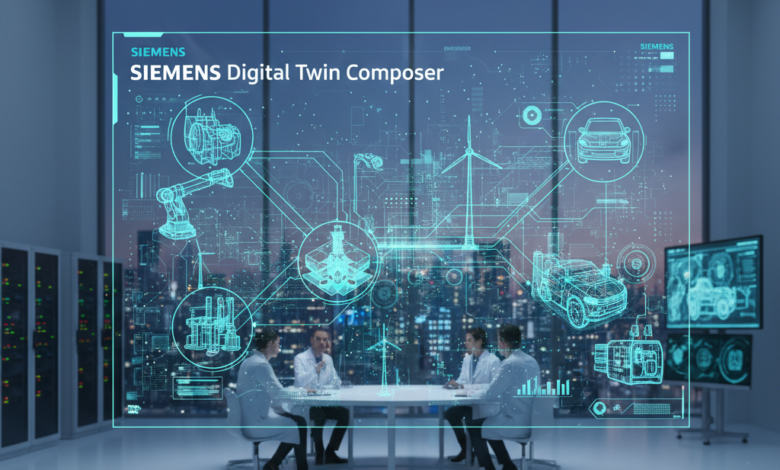
Siemens Digital Twin Composer Industrial Metaverse Unleashed the industrial metaverse is no longer a distant concept from science fiction—it has become a tangible reality thanks to Siemens’ groundbreaking innovation: Digital Twin Composer. This advanced software solution is transforming how industries approach digital transformation by enabling highly immersive, photorealistic virtual environments that mirror real-world systems.
Siemens’ visionary move brings the Industrial Metaverse to life and empowers organizations to harness digital twins, industrial AI, and real-time data to simulate, analyze, and make decisions in virtual space before executing them in the physical world.
In today’s fast-paced technological landscape, companies must adopt innovative tools to stay competitive, reduce costs, enhance productivity, and future-proof their operations. Digital Twin Composer is at the forefront of these initiatives—a software platform that combines AI-driven simulations, immersive visualization, and real-time integration to create highly accurate and interactive digital replicas of physical assets and processes. With its launch at CES 2026 and availability via the Siemens Xcelerator Marketplace later this year, this solution marks a turning point for industrial digitalization on a global scale.
The Industrial Metaverse
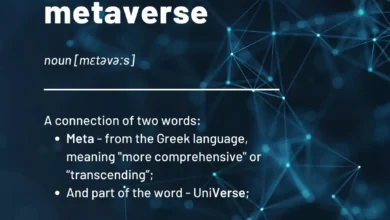
The industrial metaverse represents the next generation of digital transformation. Unlike the consumer-focused metaverse that is often associated with gaming and social experiences, the industrial metaverse merges digital technologies with real-world industrial systems to support engineering, manufacturing, and operational excellence.
Siemens defines this space as a virtual world mirroring real machines, factories, and infrastructure—powered by cloud and edge computing, digital twins, industrial AI, and real-time data integration. This immersive environment allows organizations to plan, simulate, and optimize entire workflows without disrupting physical operations.
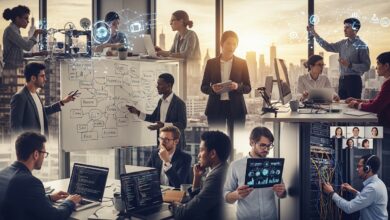
For example, teams can virtually walk through 3D models of plants, test engineering changes, or troubleshoot issues long before they occur on the factory floor. The result is increased agility, better decision-making, and reduced risk. The industrial metaverse also fosters collaboration across departments and geographies, creating a shared digital representation of complex industrial systems that stakeholders can interact with and learn from.
Digital Twin Composer
At the heart of Siemens’ industrial metaverse strategy lies Digital Twin Composer, a cutting-edge software tool that allows businesses to build and manage industrial metaverse environments at scale. This platform brings together digital twin technology, industrial AI, simulation tools, and real-time operational data to empower engineers, designers, and decision-makers to operate in a digital-first context.
Unlike basic digital twins that represent a single machine or component, Digital Twin Composer creates interconnected simulations of entire systems, processes, and facilities. It integrates 3D models with real-time data streams from physical assets and provides photorealistic visualizations using technologies like the NVIDIA Omniverse. This enables companies to simulate complex scenarios, predict outcomes, and evaluate multiple variables in a fully immersive virtual environment.
By combining high-fidelity simulation with AI and real-time feedback, Digital Twin Composer enables industries to explore “what-if” scenarios, optimize performance patterns, and drastically reduce costs associated with trial-and-error in the physical world. This helps businesses from manufacturing to supply chain logistics make better-informed decisions at speed and scale.
Siemens Digital Twin Composer
Digital Twin Composer is more than just visualization software—it’s a comprehensive platform for industrial intelligence. By merging industrial AI, advanced simulations, and real-time physical data, Siemens is empowering businesses to elevate their operational strategies and unlock new levels of efficiency.
One of the key advantages of this platform lies in its ability to integrate diverse data sources—ranging from sensor feeds and machine logs to engineering models and simulation results. This data synthesis enables predictive analytics that help organizations identify bottlenecks, foresee maintenance needs, and enhance overall system performance.
Moreover, with AI-driven insights embedded directly into the digital twin, teams can automate decision support and accelerate response times in complex environments. Imagine a manufacturing plant where operators can test the impact of equipment upgrades or process changes virtually, without disrupting actual workflows.
With Digital Twin Composer, engineers can explore these changes in a digital environment that mimics the real world with high precision. This virtual-first approach not only reduces the risk of costly mistakes but also shortens planning cycles and boosts innovation.
Real-World Applications Across Industries
The power of Digital Twin Composer and the industrial metaverse is manifesting in several real-world applications across diverse sectors. At CES 2026, Siemens showcased the technology working alongside partners such as Universal Robots and Robotiq, where a robotic palletizing solution was digitally simulated in real time, enhancing efficiency and design verification before physical execution.
Beyond robotics, collaborations like the one between Siemens, PepsiCo, and NVIDIA illustrate how digital twin technology is reshaping facility design and supply chain operations at global scale. PepsiCo is using Digital Twin Composer combined with physics-based simulations and AI to redesign facility processes and validate improvements virtually, enabling operational agility and cost savings.
Industries such as automotive manufacturing, energy production, and urban infrastructure are also leveraging this technology. By creating highly detailed digital replicas of equipment and facilities, companies can simulate stress tests, supply chain disruptions, and infrastructure upgrades before rolling them out physically. This approach offers a level of foresight and resilience that was previously unattainable outside controlled test environments.
Siemens Xcelerator and Ecosystem Integration
Digital Twin Composer is not a standalone product—it is part of the broader Siemens Xcelerator ecosystem, a curated portfolio of software, hardware, and services designed to accelerate digital transformation. The platform integrates seamlessly with other Siemens solutions, such as industrial IoT tools, automation systems, and cloud services. This interconnected ecosystem supports the creation of comprehensive digital twins that encapsulate not just machines, but complete enterprise systems.
Siemens Xcelerator also fosters collaboration with industry leaders like NVIDIA and AWS, further enriching the industrial metaverse experience with cutting-edge AI, visualization technologies, and cloud computing capabilities. Through these partnerships, Siemens is enabling businesses to scale their digital twin initiatives, connect data streams across platforms, and enrich virtual experiences with analytics, machine learning, and real-time insights.
This integration enables a more holistic approach to digital transformation. Rather than siloed data and isolated systems, companies can now access a unified digital infrastructure that supports everything from product design and engineering to operations and maintenance—all within a dynamic metaverse environment
Challenges and Considerations
Despite its transformative potential, adopting industrial metaverse technologies like Digital Twin Composer also presents challenges. Organizations must invest in modernizing their data infrastructure to support large-scale simulations and real-time data flows. They also need to develop cross-disciplinary teams capable of interpreting complex simulation results and drawing actionable insights from them. Moreover, security becomes a critical concern when virtual environments are connected to real-time operational data, necessitating robust cybersecurity measures.
Training and change management also play key roles. As companies transition to digital-first operations, workforce upskilling is necessary to familiarize teams with new tools, interpret AI-driven recommendations, and effectively collaborate within virtual spaces.
However, the long-term benefits—enhanced innovation, improved sustainability, lower operating costs, and accelerated decision-making—often outweigh the initial investment.
The Future of the Industrial Metaverse
As more organizations embrace digital transformation, the industrial metaverse will continue to evolve beyond its nascent stage. Technologies like Digital Twin Composer are laying the groundwork for a future in which virtual simulations and real-world operations are deeply intertwined. Companies that adopt these breakthroughs early will gain competitive advantage by accelerating innovation cycles, improving resilience, and unlocking efficiencies that were previously unimaginable.
With continuous enhancements in AI, simulation capabilities, and data integration, the industrial metaverse will expand in complexity and utility. As Siemens and its partners push the boundaries of what’s possible, virtual environments will become more immersive, more intelligent, and even more indispensable to industrial success.
Conclusion
Siemens’ Digital Twin Composer is a monumental step in bringing the industrial metaverse to life. By combining digital twin technology, industrial AI, real-time data, and immersive simulation, this software is empowering industries to operate with greater foresight, efficiency, and agility. As it becomes available on the Siemens Xcelerator Marketplace and gains adoption across sectors, Digital Twin Composer is poised to redefine how industries design, simulate, and optimize their operations. The industrial metaverse is no longer a distant vision—it is here, reshaping the future of industrial innovation.
FAQs
Q. What is the industrial metaverse?
The industrial metaverse is a digital ecosystem where virtual replicas of physical systems are created to simulate, analyze, and optimize operations in real time. It integrates digital twin technology, industrial AI, and data connectivity to enhance decision-making.
Q. How does Digital Twin Composer support industrial transformation?
Digital Twin Composer allows organizations to build immersive, photorealistic digital environments that mirror real-world processes. It enables predictive simulations, virtual planning, and AI-driven insights, reducing risk and improving operational performance.
Q. What industries can benefit from Digital Twin Composer?
Manufacturing, supply chain logistics, energy, automotive, and infrastructure sectors can all benefit by simulating complex scenarios and optimizing systems before real-world implementation.
Q. Is Digital Twin Composer available now?
Siemens announced its launch at CES 2026, with plans to make it available via the Siemens Xcelerator Marketplace later in 2026.
Q. How does Siemens integrate AI into the industrial metaverse?
Siemens combines industrial AI with digital twin data and simulation engines, often leveraging partners like NVIDIA, to generate predictive analytics and intelligent insights that support decision-making within the industrial metaverse.