XRP price has a way of turning quiet periods into sudden, headline-grabbing moves. Traders who follow technical analysis often watch XRP closely because it tends to react sharply when a key trend line breaks, when momentum flips, or when liquidity rushes back into the broader crypto market. Right now, the XRP price is sitting in a zone that many chart readers consider pivotal: a region where a developing trend could either confirm a bullish continuation or fail and send price back into a choppy consolidation.
When people talk about the XRP price surging another 30%, they’re usually referring to a measurable, chart-based target that becomes realistic only after confirmation. In trading terms, “confirmation” is more than hope or hype. It means the market has provided evidence—through structure, volume, and follow-through—that a trend is real and not just a temporary spike. For the XRP price, that evidence typically involves a clean break above resistance, strong demand showing up on the tape, and momentum indicators shifting from neutral to bullish.
This article breaks down what that “trend confirmation” can look like for the XRP price, why a 30% move is a common projection in these setups, and what factors traders monitor to avoid getting trapped in false breakouts. You’ll also learn how support and resistance zones shape the next potential leg, why volume confirmation matters so much, and which catalysts—like regulatory clarity, Ripple ecosystem developments, and broader market cycles—can amplify or limit any breakout attempt.
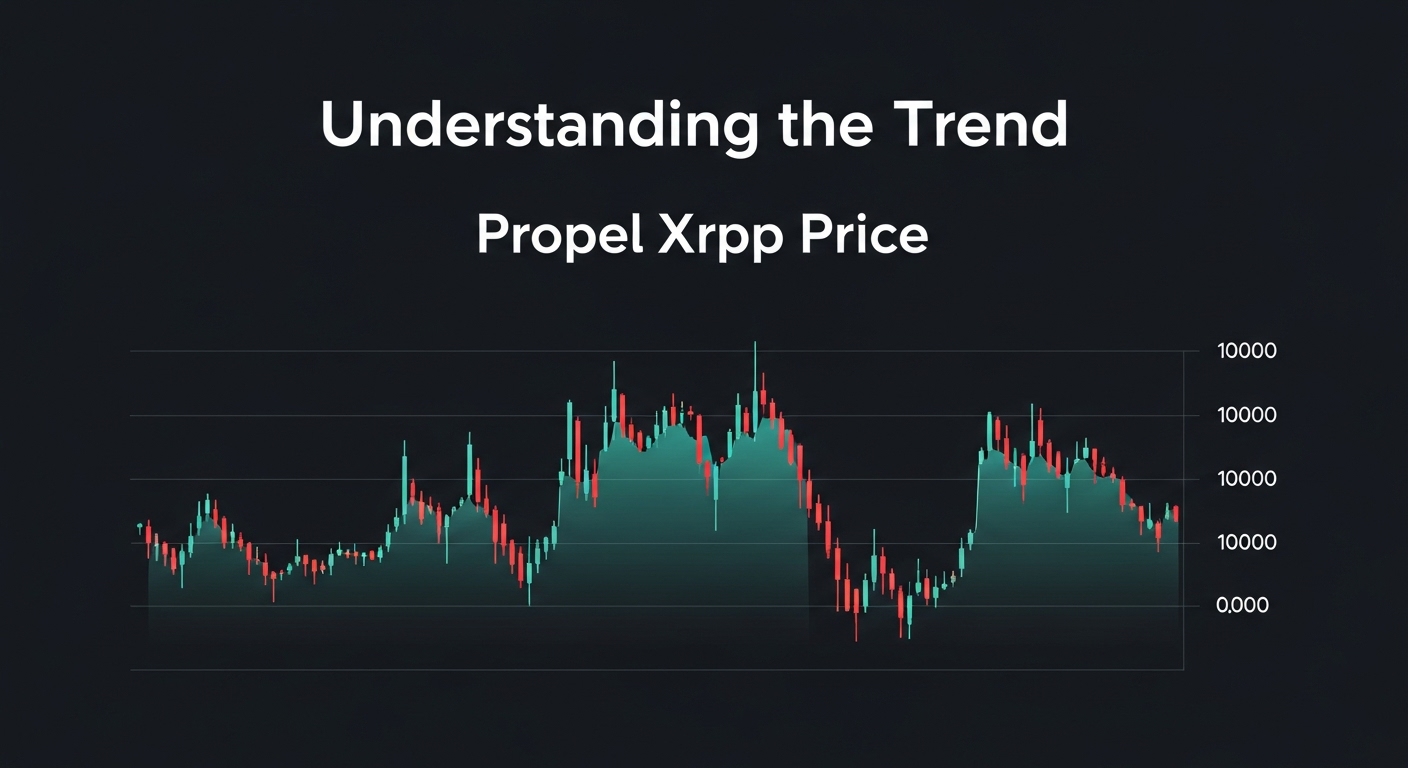
Understanding the Trend That Could Propel the XRP Price
A potential 30% move in the XRP price usually stems from one of a few classic trend scenarios. The most common is a bullish continuation pattern where price compresses, volatility contracts, and then a breakout triggers an expansion phase. In simple terms, the market “coils” and then “springs.” For the XRP price, those coiling phases are often visible on the daily chart as a tightening range, a sequence of higher lows, or a prolonged battle between buyers and sellers at a specific ceiling.
A trend worth watching is a sustained sequence of higher highs and higher lows—market structure that indicates buyers are willing to pay more over time. If the XRP price prints higher lows while repeatedly testing a resistance band, it suggests supply at that level is being absorbed. Once that supply is exhausted, the next push can be forceful. This is exactly why traders don’t just look for a single breakout candle; they look for signs that the breakout is supported by participation and follow-through.
Another trend that can drive the XRP price is the reclaim of major moving averages, particularly when price transitions from trading below them to holding above them. In many altcoins, reclaiming a key average can flip sentiment from “sell rallies” to “buy dips.” That shift in behavior is one reason the XRP price can move quickly after confirmation: the market’s default posture changes.
What “Confirmed” Actually Means for XRP Price Action
Trend confirmation for the XRP price is best understood as a checklist of conditions that reduce the odds of a fakeout. The first condition is structural: the XRP price needs to break above a clear resistance level that has rejected price multiple times. The second condition is behavioral: after breaking out, the XRP price should either continue higher with strong candles or successfully retest the breakout zone as new support.
This retest is crucial. Markets often revisit breakout levels to see if buyers will defend them. If the XRP price revisits the former resistance and holds, it signals that demand has stepped up at that level. When that happens, traders often call it a “support flip,” and it can mark the start of a new trend leg.
The third condition is participation: volume confirmation should expand on the breakout. Without volume, breakouts are fragile. The XRP price can pop above resistance on thin liquidity, but it may not sustain the move if real buyers aren’t present. Finally, momentum indicators—like RSI—should support the story by moving into a bullish regime without immediately flashing exhaustion.
Why a 30% XRP Price Target Is Common in These Setups
A projected 30% increase in the XRP price typically comes from measured-move techniques used in charting. One simple approach is to measure the height of the consolidation range and project it upward from the breakout point. Another is to target the next major resistance zone on higher time frames, such as the weekly chart.
For the XRP price, a 30% target often aligns with the distance between a well-defined resistance band and the next liquidity pocket where sellers previously took control. Because XRP tends to trade in recognizable ranges, these measured moves can be surprisingly consistent—especially when the broader crypto market is supportive and risk appetite is rising.
Key Technical Signals Traders Watch for XRP Price Confirmation
The XRP price can look bullish on one indicator and bearish on another, which is why traders rely on confluence. Confluence means multiple signals pointing in the same direction, making a trend more credible. For the XRP price, the most watched technical signals revolve around structure, momentum, and volume.
Moving Averages and the XRP Price Trend Shift
A major sign that the XRP price is transitioning from consolidation to expansion is the reclaim of key moving averages. Many traders watch the 50-day and 200-day moving averages because they often define whether the market is in a bullish or bearish environment. If the XRP price climbs above a major average and then holds it during pullbacks, that average can become a dynamic support line.
More importantly, when shorter-term averages begin to slope upward and cross above longer-term averages, sentiment can flip. That doesn’t guarantee upside, but it can attract trend-followers who previously stayed on the sidelines. For the XRP price, these shifts can matter because they tend to coincide with new demand entering the market.
RSI, Momentum Regimes, and XRP Price Strength
The RSI is popular because it helps traders understand momentum regimes. In strong uptrends, RSI tends to hold above mid-levels and often pushes into higher bands during rallies. For the XRP price, a bullish regime is commonly associated with RSI staying elevated during pullbacks rather than collapsing into oversold territory.
However, RSI should be interpreted carefully. An “overbought” reading doesn’t automatically mean the XRP price must drop. In trending markets, overbought can simply mean “strong.” The better clue is whether RSI makes higher lows along with the XRP price and whether the indicator confirms new highs rather than diverging.
Volume Confirmation and Breakout Quality for XRP Price
If there’s one factor that separates “real” from “fake,” it’s volume confirmation. A breakout with rising volume suggests broad participation. For the XRP price, this is especially important because sudden spikes can occur on news, liquidations, or brief bursts of hype. Those moves can fade fast if volume doesn’t sustain or if the follow-through candle is weak.
A healthy breakout often shows a surge in volume on the initial push and then steadier volume as price consolidates above the breakout zone. If the XRP price breaks out and volume immediately dies, the move may be vulnerable to a pullback.
Support and Resistance Levels That Matter for XRP Price
The XRP price is heavily influenced by support and resistance because those levels represent areas where market participants previously made big decisions. Resistance is where sellers have historically shown up. Support is where buyers have defended price. In a potential trend confirmation scenario, the focus is on whether resistance becomes support.
When the XRP price repeatedly fails at a ceiling, that ceiling becomes psychologically important. Traders place sell orders there, and short-sellers often build positions expecting another rejection. If the XRP price breaks that ceiling and holds above it, those shorts may rush to cover, adding fuel to the move. At the same time, breakout traders may enter, and sidelined buyers may feel more confident. That combination can create the kind of momentum that makes a 30% move plausible.
On the downside, if the XRP price fails to hold the breakout zone, the market can snap back into the old range. In that case, former resistance does not become support, and the trend isn’t confirmed. This is why traders watch retests so closely: the XRP price doesn’t need to go straight up, but it does need to demonstrate that buyers are willing to defend key levels.
Liquidity Zones and Why XRP Price Moves Can Accelerate
Liquidity often clusters around obvious levels. When the XRP price approaches a major resistance area, a large number of stop-loss orders and breakout orders can pile up. If price pushes through that level, those orders can trigger rapidly, creating a sharp move.
This “liquidity sweep” dynamic is one reason the XRP price can surge quickly after confirmation. It’s not just organic buying; it’s also the mechanical effect of orders triggering. If broader market conditions are bullish—like rising Bitcoin dominance shifting into altcoin season—the follow-through can be even stronger.
On-Chain and Market Data That Can Support an XRP Price Rally
While chart structure is the backbone of trend confirmation, other signals can add credibility. For the XRP price, traders often look at on-chain metrics, exchange flows, and derivatives positioning. These data points don’t predict the future with certainty, but they can hint at whether demand is building under the surface.
Whale Activity and Accumulation Signals for XRP Price
Large holders, often called whale activity, can influence the XRP price by adding liquidity at key moments. Accumulation patterns sometimes show up as steady buying during consolidations, where price doesn’t move much but the “base” strengthens. If whales are accumulating, the XRP price can become more resilient on dips, making a breakout more likely to hold.
That said, whale behavior can cut both ways. Sudden large transfers to exchanges can signal potential selling pressure. For the XRP price, the most constructive scenario is when exchange balances remain stable or decline while price structure improves.
Derivatives, Funding Rates, and XRP Price Volatility
Derivatives markets can amplify XRP price moves. When funding rates become excessively positive, it can indicate crowded long positions, which increases the risk of a pullback. On the other hand, moderate funding during a breakout can be healthier because it suggests the move isn’t purely driven by leveraged speculation.
Liquidations are another key factor. If the XRP price breaks resistance, short liquidations can cascade, accelerating the move. This is one reason a 30% surge becomes realistic: leverage can turn a normal breakout into a rapid expansion.
Fundamental Catalysts That Could Reinforce the XRP Price Trend
Even the best chart setup benefits from a supportive narrative. For the XRP price, fundamentals often revolve around Ripple, the XRP Ledger, adoption in cross-border payments, and the evolving regulatory environment. While technicals can trigger entries, catalysts can sustain momentum by attracting fresh capital.
Ripple, XRP Ledger Utility, and Cross-Border Payments
The XRP Ledger is frequently discussed in the context of speed and efficiency. When market participants believe utility narratives are strengthening—whether through ecosystem growth, integrations, or improved liquidity—sentiment around the XRP price can improve. Utility doesn’t guarantee immediate price gains, but it can help explain why buyers might step in during dips and defend support.

A common driver of stronger sentiment is the idea that XRP could play a role in liquidity for payment corridors. When that story resonates, it can provide the “why” behind the “what” on the chart.
Regulatory Clarity and the XRP Price Risk Premium
Regulation can act like a risk premium on crypto assets. When uncertainty is high, investors demand a bigger discount. When regulatory clarity improves, that discount can shrink, allowing the XRP price to re-rate higher. Even the perception of improving clarity can affect positioning, particularly for traders who avoided XRP during uncertain periods.
Because this topic can shift quickly, it’s best to focus on the market principle: when perceived risk declines, demand can rise, and the XRP price can respond. If a bullish trend is trying to confirm, improved sentiment can be the push that turns a breakout into a sustained run.
What Could Invalidate the Bullish XRP Price Setup
No trend is guaranteed. The XRP price can look ready to break out and still fail. Invalidation signals matter because they help traders avoid turning a bad trade into a long-term bag-hold.
A common invalidation is a breakout that immediately falls back below the breakout level and closes there on the daily chart. That pattern suggests the market rejected higher prices and trapped late buyers. Another warning sign is declining volume on the breakout combined with strong selling volume on the reversal. That imbalance can indicate distribution rather than accumulation.
Macro conditions also matter. If the broader crypto market turns risk-off—whether due to a sharp Bitcoin drop or broader financial stress—the XRP price can struggle to sustain bullish structure even if the chart looked healthy before.
Finally, watch the pace of the move. If the XRP price surges too far too fast without consolidation, it can become vulnerable to profit-taking. A trend can still be bullish, but the path might include sharp pullbacks that shake out weak hands.
How Traders Approach an XRP Price Breakout Without Overcommitting
The most disciplined approach to a potential XRP price surge is to respect confirmation and risk management. Trend confirmation reduces risk, but it does not remove it. Many traders prefer waiting for the breakout, then waiting again for the retest. That method can mean missing the very first part of the move, but it often increases the odds that the XRP price is truly shifting into a new range.
Another common approach is scaling—entering smaller positions near confirmation points rather than going all-in on a single candle. Because the XRP price can be volatile, avoiding emotional decision-making is often as important as the chart itself.
This is also a good place to be clear: nothing here is financial advice. The XRP price can move unpredictably, and every market participant should assess risk based on their own situation.
Conclusion
A 30% rally in the XRP price is not a fantasy scenario in crypto; it’s a realistic measured move when a well-defined trend is confirmed. The key is understanding what confirmation looks like: a decisive break above resistance, a successful retest that turns old resistance into new support, and volume confirmation that signals real participation. When momentum indicators like RSI align with improving structure and broader market sentiment, the XRP price can enter an expansion phase where gains come quickly.
At the same time, traders should respect invalidation signals. If the XRP price fails to hold the breakout zone or the market turns risk-off, the setup can break down. In crypto, patience and confirmation often beat prediction. If the trend is confirmed, the path toward a 30% surge becomes clearer. If it isn’t, the smartest move may be waiting for the next high-probability opportunity.
FAQs
Q: What is the key trend that could push the XRP price up 30%?
The most important trend is a bullish structural shift where the XRP price breaks a well-tested resistance zone and then holds above it. That support flip, especially with volume confirmation, often sets the stage for a measured move that can approach 30%.
Q: How can I tell if the XRP price breakout is real or a fakeout?
A real breakout in the XRP price typically shows strong daily closes above resistance, rising volume during the breakout, and a clean retest where the former resistance holds as support. Fakeouts often drop back into the old range quickly and show weak follow-through.
Q: Why does volume confirmation matter so much for XRP price moves?
Because the XRP price can spike on thin liquidity, volume helps confirm whether demand is broad and sustained. Higher volume during and after a breakout suggests that more participants are committing capital, which increases the odds the move continues.
Q: Do fundamentals like Ripple adoption affect the XRP price trend?
They can. While the chart often triggers the move, narratives around Ripple, the XRP Ledger, and cross-border payments can support sentiment and keep buyers engaged. Stronger perceived utility and regulatory clarity can reduce uncertainty and help trend continuation.
Q: What are the biggest risks to an XRP price rally right now?
The biggest risks are a failed breakout that sends the XRP price back into its prior range, a broader downturn in the crypto market, or an overheated derivatives market where crowded leverage causes sharp liquidations in both directions.
See More: XRP Fund Flows Rise 353% in One Week